
Flat and Ellipse Lash Trays for a Defined Classic Range
A flat or ellipse lash order begins with the exact construction your professional team wants. We help you compare the relevant catalogue references and turn that selection into a clear tray and packaging brief.
Keep the product identity, measurements and accepted sample together. A flat-lash name alone does not establish the same fiber profile across several references.
Explore professional lash trays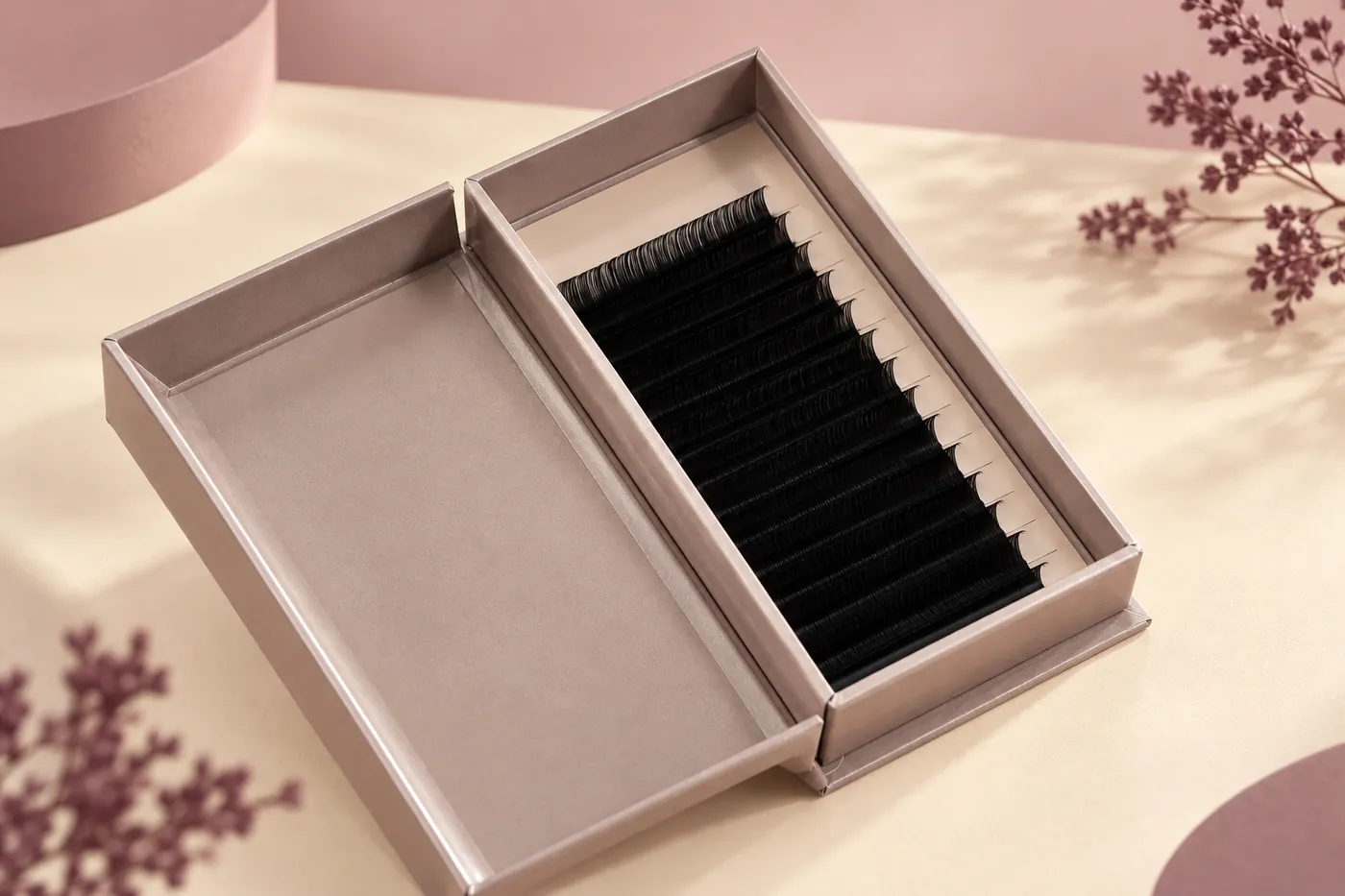
Define the Construction Before Comparing Labels
Product 5493 is described as an ellipse flat lash with split tips. Keep that description attached to the reference rather than extending it automatically to every flat-lash listing.
We can review the requested profile and sample criteria with your team. Application suitability remains part of your professional assessment.
Use the Listed Curl and Diameter Together
Product 5493 lists C or D curl with 0.15 or 0.20 mm options and single lengths from 7–16 mm, plus a Mix option.
Record the exact combination and confirm the mixed-length allocation. Do not replace that detail with a general classic-lash description.
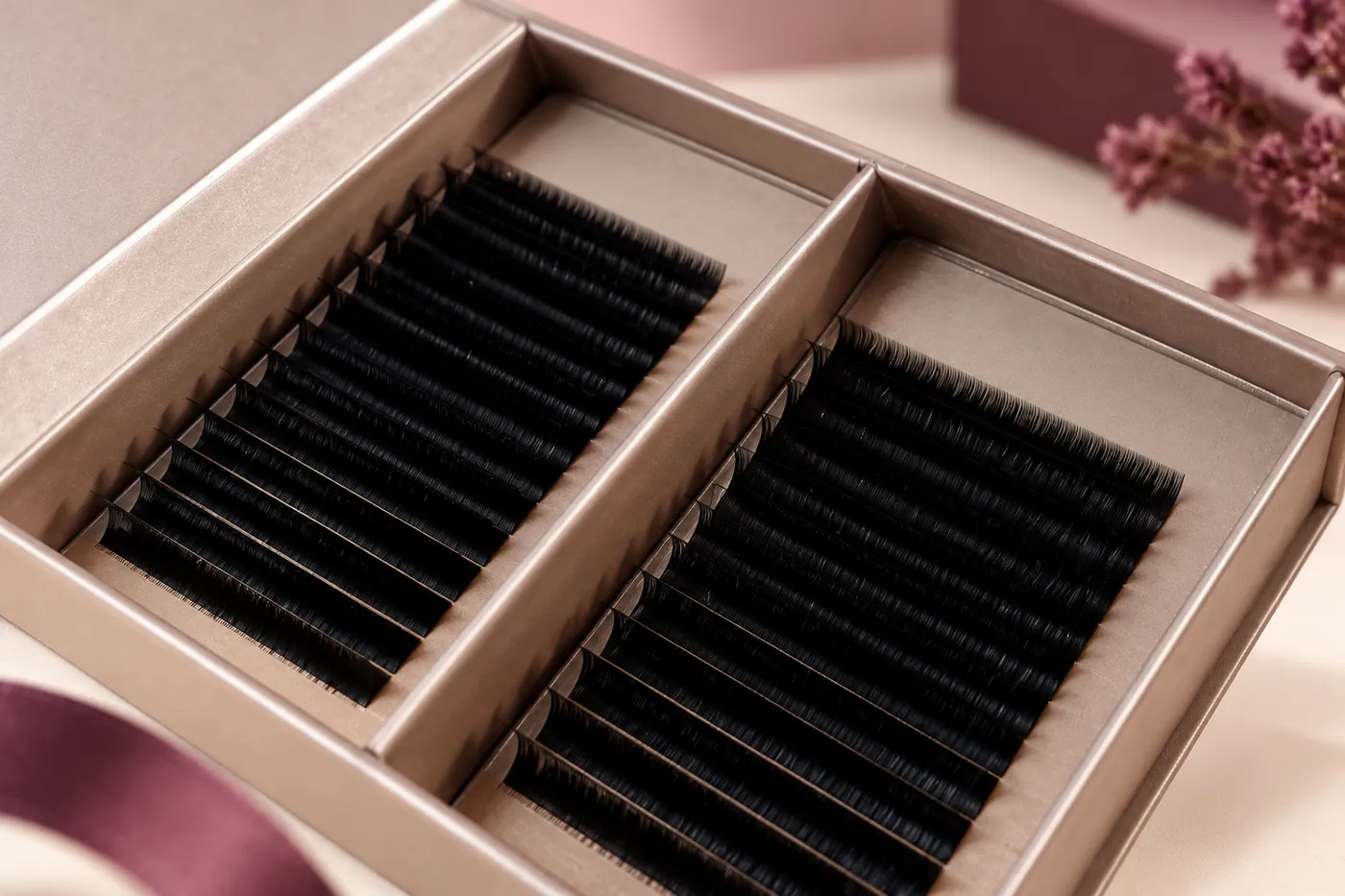
Compare the Alternate Listings on Their Own Basis
Products 5400 and 5399 list C, CC, D and DD curls with 7–16 mm single lengths, Mix and Other. Their diameter, row count and exact pack quantity need confirmation.
The package labels 1 and Customize should not be treated as a verified tray count or a completed custom specification.
| Reference | Listed options | Confirm for your order |
|---|---|---|
| 5493 | C/D; 0.15/0.20; 7–16 mm or Mix | Rows and mixed allocation |
| 5400 | C/CC/D/DD; singles, Mix and Other | Diameter, rows and pack basis |
| 5399 | C/CC/D/DD; singles, Mix and Other | Exact selected version and contents |
Planning fields for your selected order.
Plan the Tray and Outer Pack Together
Choose the accepted tray before preparing printed packaging. The carton and back card should identify the selected curl and length arrangement accurately.
We can discuss the physical and artwork scope with you while keeping the product specification visible.
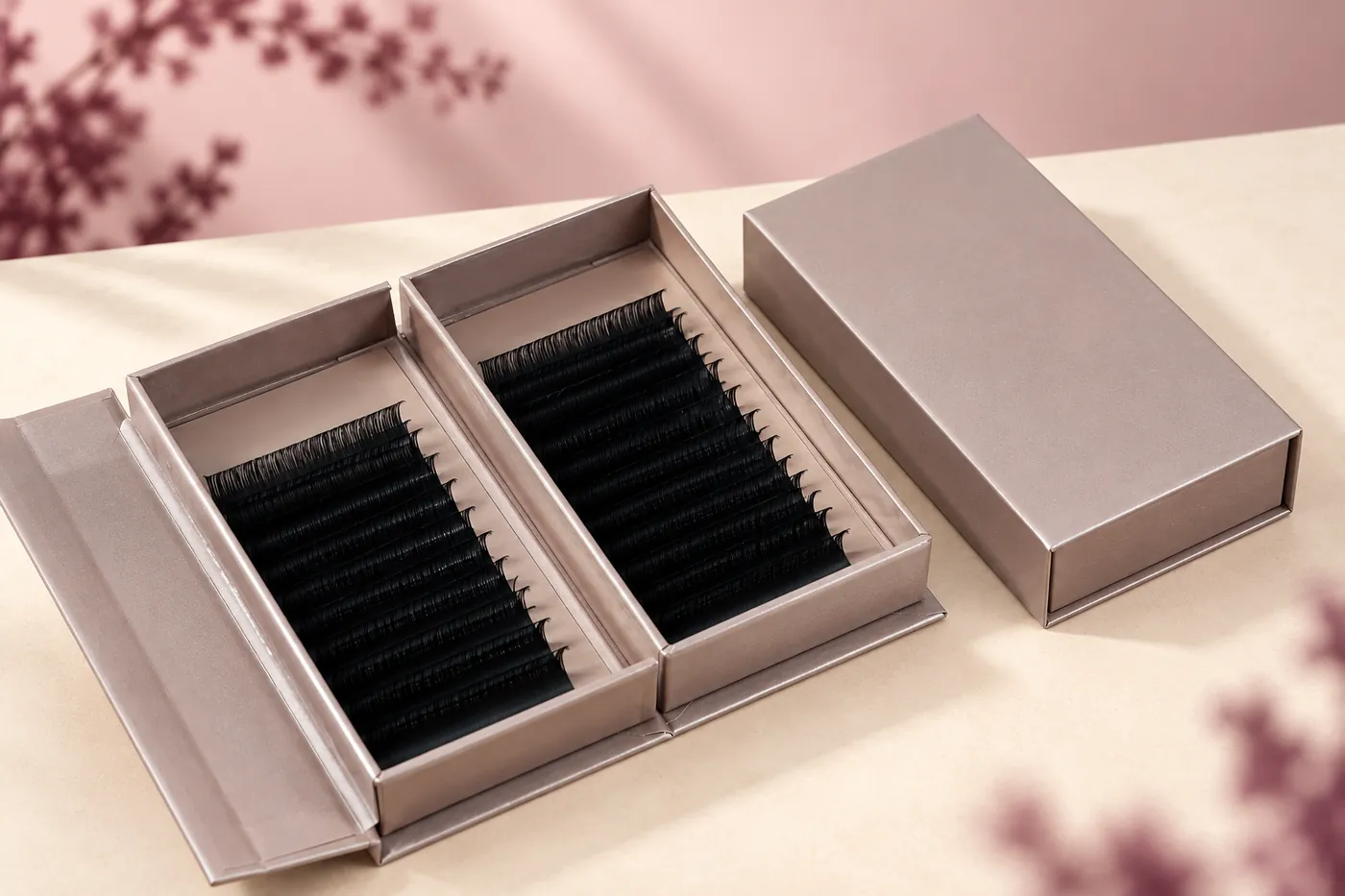
Give the Sample Review a Clear Purpose
Ask your professional team to define the features they need to compare: curl profile, visible finish, selected construction and tray layout.
Keep the review tied to a named sample. Neither a styled image nor a generic softness claim establishes adhesive contact, retention or a weight comparison.
Keep Similar Trays Separately Identified
Two trays can look similar while carrying different specifications. Give each selected reference its own SKU and sample identity.
We can use those records when you expand the range or request a repeat order, avoiding substitutions based on carton appearance.
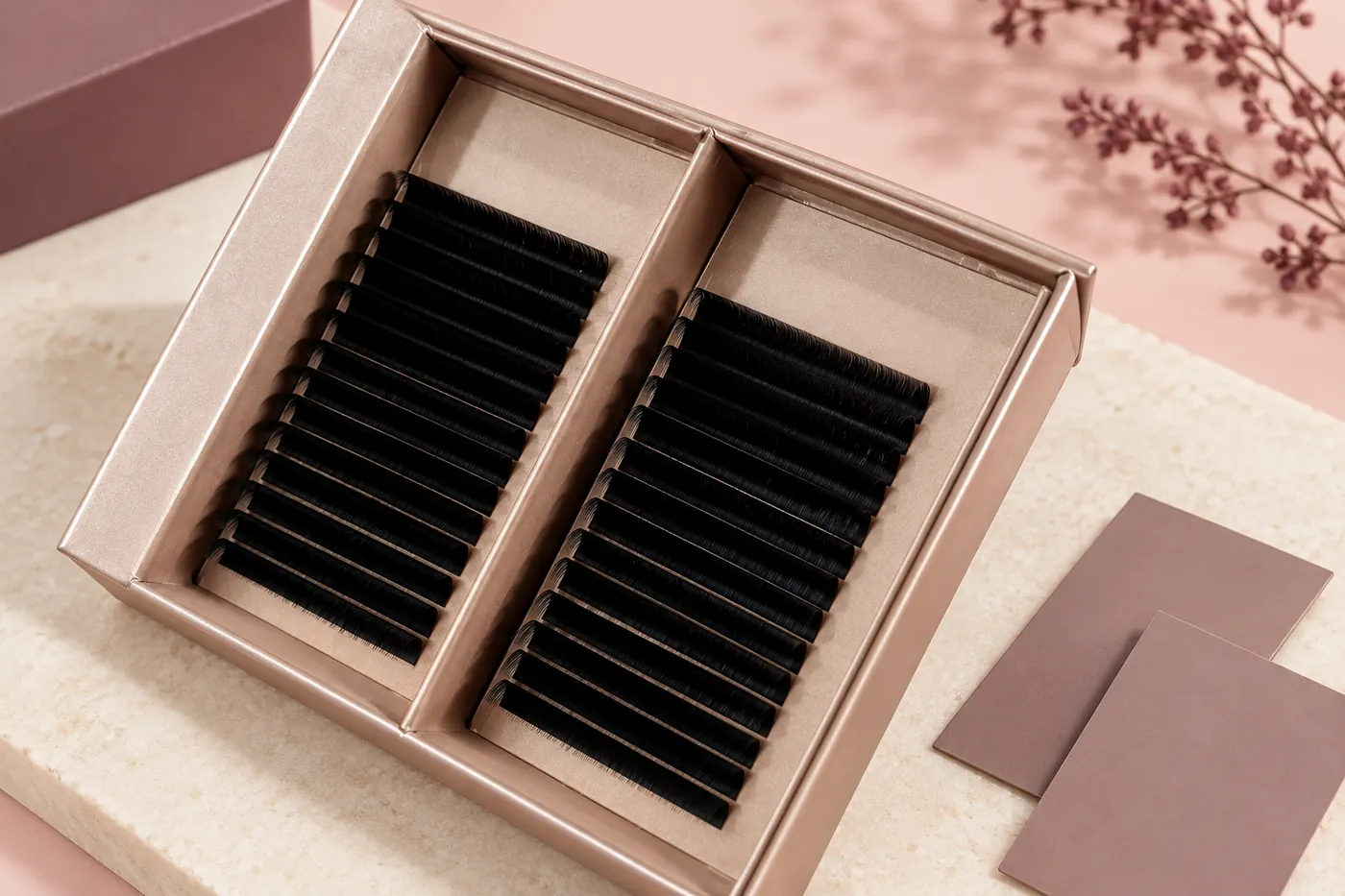
Build the Assortment from Confirmed Combinations
Record the actual combinations your range needs, rather than copying every possible option into the first order. Keep unconfirmed measurements visible as open items.
We can then discuss samples and quantities for a focused assortment.
Compare the Quote on a Consistent Pack Basis
State rows per tray, accepted length allocation and confirmed pack quantity beside the product selection. Add printed-packaging requirements and delivery context.
We can review the quote against that scope without assuming that two carton prices describe equivalent contents.
Send the Flat-Lash Selection Record
Send the selected references, the construction your team wants to review, exact measurements and quantity by variant. Add sample criteria, packaging direction and destination.
We can help you move from a broad flat-lash category to a defined sourcing brief.
Discuss your flat-lash tray order