
Private Label Lash Manufacturing for Your First Brand Range
A first branded range works best when the lash format, selling unit and packaging are settled together. We are Qingdao Relia Lashes Co., Ltd., a false-eyelash factory in China working with overseas brands, distributors and salons on custom and wholesale orders.
Start with one customer and a small set of clearly different products. Our catalogue includes 12-row easy-fan trays, three-row DIY clusters and cotton-band strip styles. Each leads to a different sample brief, retail pack and replenishment plan.
Explore the private label range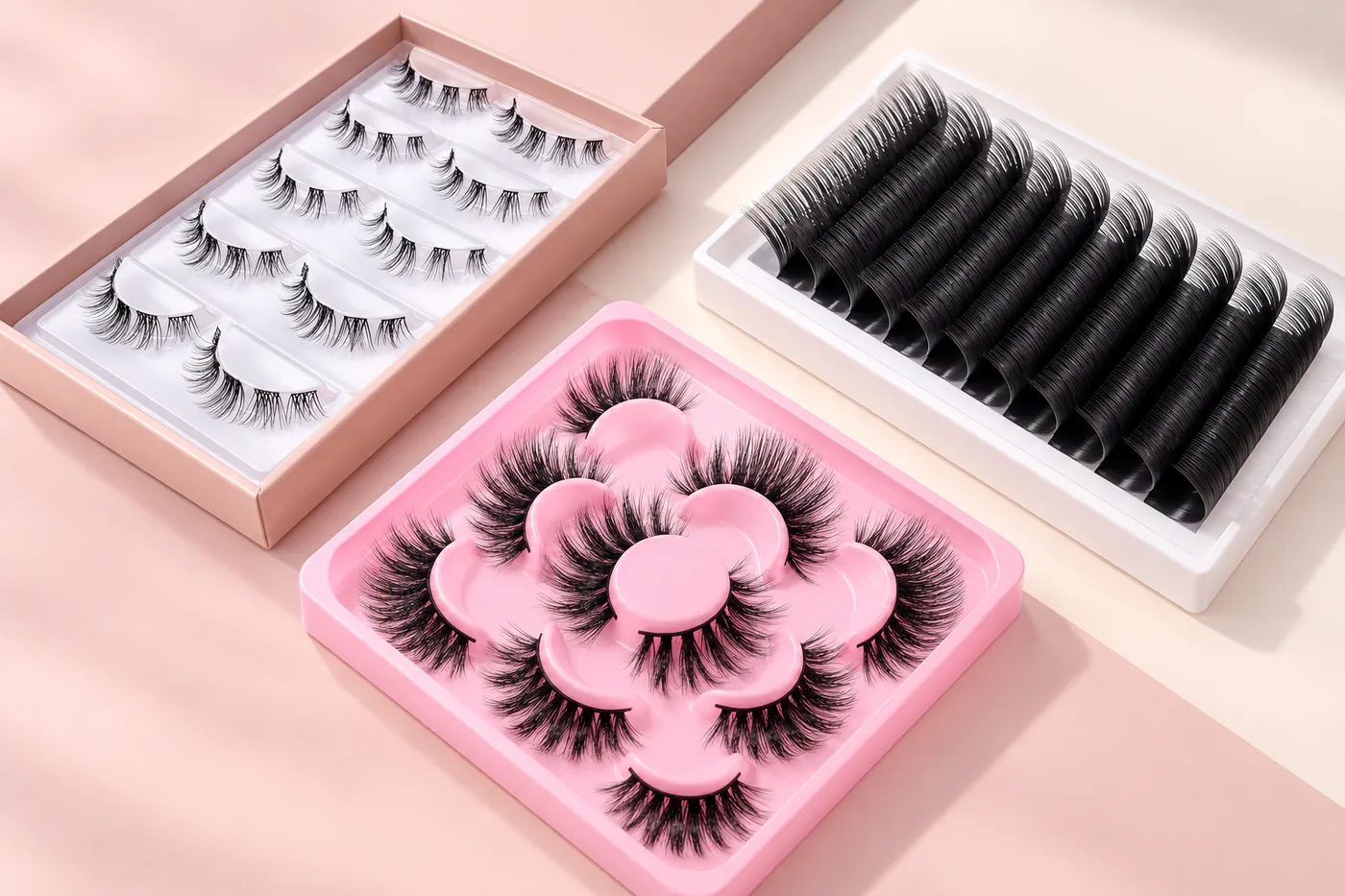
Choose a Range Your Customer Can Understand
For a professional brand, a focused launch could group trays by curl and length. For a home-use brand, a mixed-length cluster tray may communicate the offer more clearly than many near-identical single lengths. For makeup retail, style codes distinguish complete strip pairs.
Planning example: two curls and three single lengths create six tray variants before packaging is added. Adding a second diameter doubles that to twelve. Keep that choice deliberate so your first packaging order does not scatter across slow-moving variants.
| Customer | Starting reference | Range decision |
|---|---|---|
| Lash artist | 12-row easy-fan tray | Curl × diameter × length |
| DIY retail buyer | Three-row cluster tray | Mixed lengths or selected singles |
| Makeup customer | Cotton-band strip pair | Named style and pairs per pack |
Put Actual Specifications Behind the Brand
Our easy-fan reference lists 0.03, 0.05, 0.07 and 0.10 mm diameters, C, CC, D and DD curls, and 7–25 mm single lengths. A useful sample request names a combination such as 0.07 mm, CC curl, 12 mm, in the listed 12-row format.
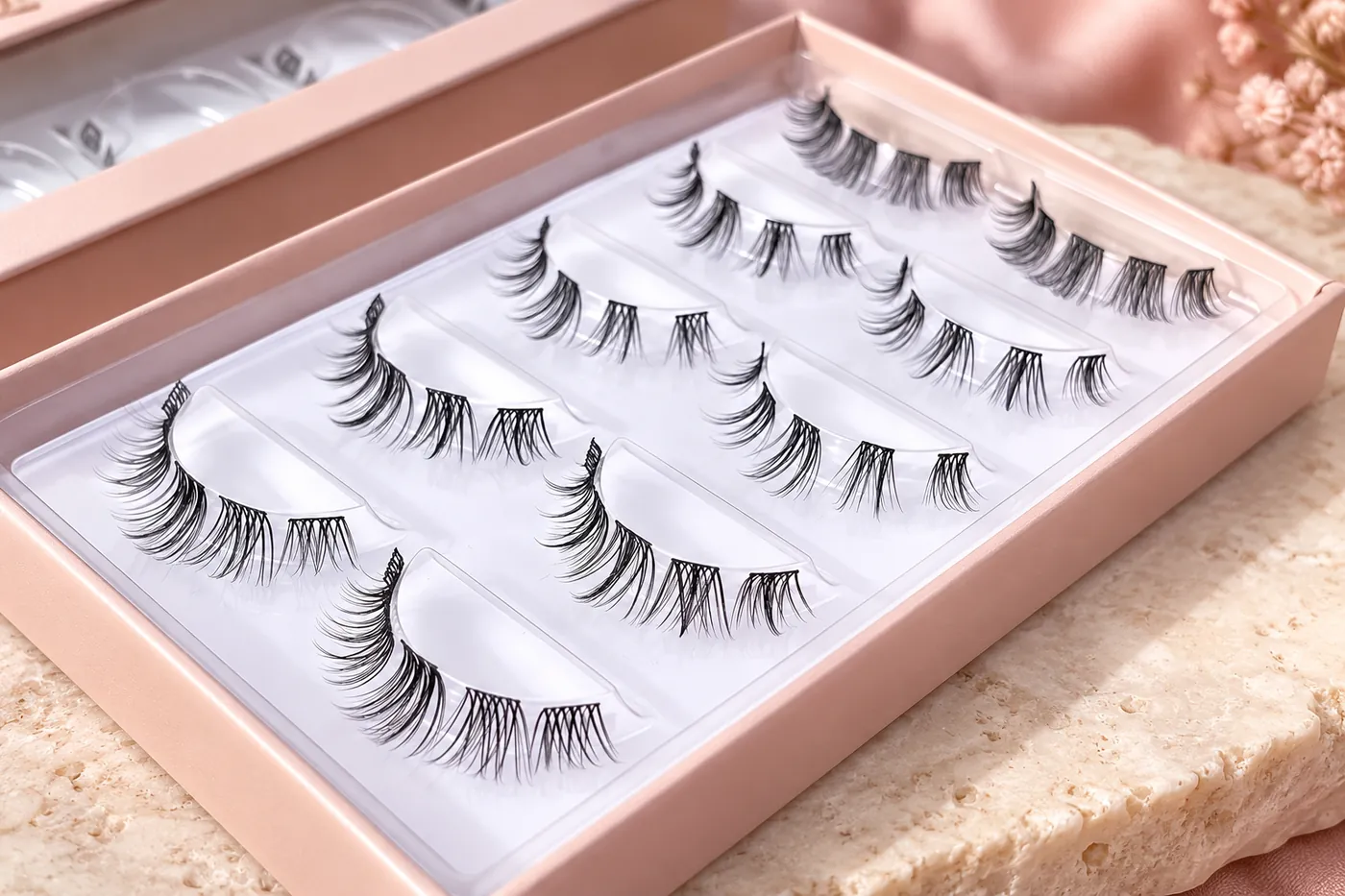
The three-row cluster reference instead describes 0.07 mm PBT, C or D curl, 8–20 mm single lengths and an 8–14 mm mix. These are separated clusters, so the tray layout and cluster bases belong in its approval notes as well as the fiber specification.
Separate a Logo Change from a Lash Change
A logo on an existing card is a presentation project. Changing a cluster base, the strip silhouette or the distribution of lengths is product development. Send those requests as separate lines so we can review the construction work and printing work independently.
For example, keeping a selected strip style and adding your carton artwork leaves the lash reference unchanged. Asking for a shorter outer corner creates a new shape requirement. The custom-development guide covers the sample comparisons needed for that second route.
Fit the Pack to the Selling Unit
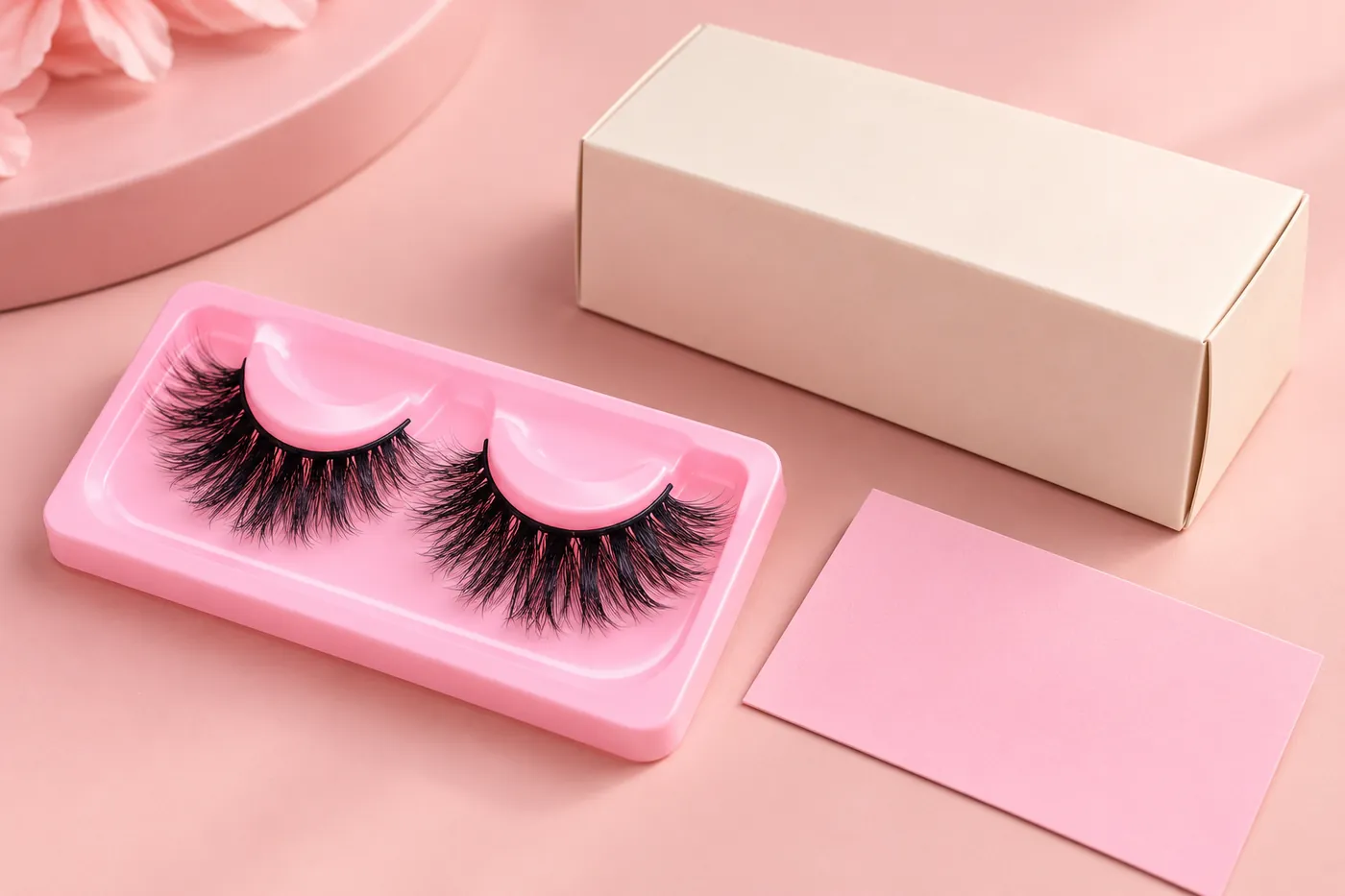
The cotton-band strip range contains distinct style codes, including XH42 and BY001. Identify the style before sizing the holder and box; a shared pink holder in a photograph does not make every lash style interchangeable.
For your packaging brief, show the number of pairs or trays per retail unit, the holder footprint, the opening direction and the printable panels. Send editable artwork separately from the product photograph. The imagery here shows plain planning components rather than an approved printed pack.
Count Lashes and Packaging Separately
Illustrative pack arithmetic: 40 trays sold one per carton need 40 retail cartons; 40 trays sold two per carton need 20 cartons. The tray quantity is unchanged, but the retail unit and artwork description differ.
Keep product quantities, printed-component quantities and spare packaging on separate quote lines. A listed minimum for an unbranded tray does not establish the minimum for a custom printed box. We review those quantities against the actual configuration.
| Illustrative configuration | Lash quantity | Retail cartons |
|---|---|---|
| One tray per box | 40 trays | 40 cartons |
| Two trays per box | 40 trays | 20 cartons |
| Spare packaging | No extra lashes implied | Separate component line |
Planning arithmetic only; these quantities are not a minimum-order offer.
Approve the Details That Affect Repeat Orders
Photograph the approved sample from above and from the side, then record the selected curl, length, finish, base appearance and row arrangement. Include a photo of the tray sitting in its retail pack, with the lid or sleeve fully closed.
Use the same reference code on the sample notes and artwork proof. Agree how an unacceptable difference will be recorded before releasing bulk production. This makes the approved reference usable for a repeat order instead of leaving approval as a vague comment about softness.
Keep Accessories as Defined Order Lines
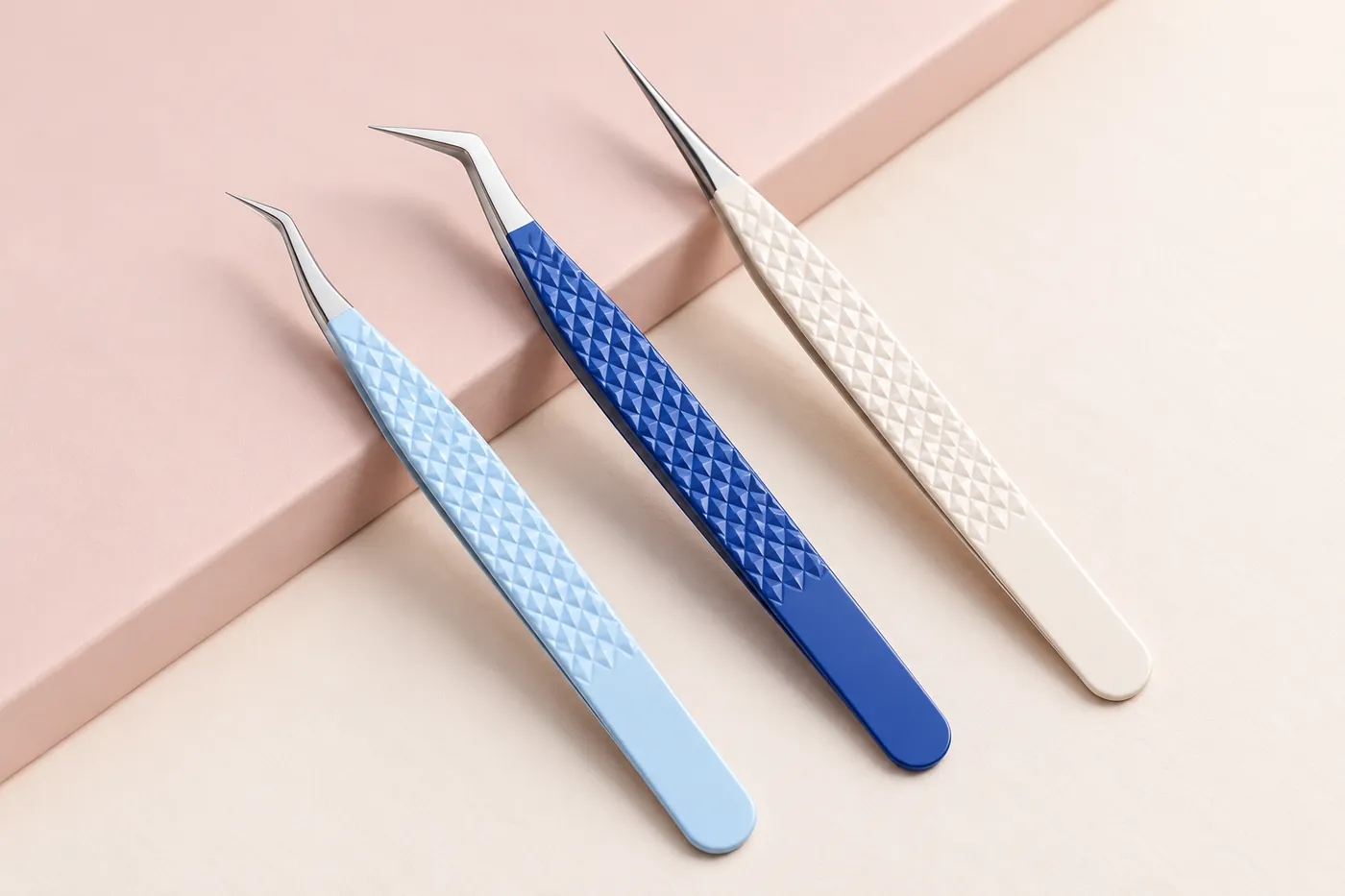
Our stainless steel tweezer reference has seven coded selections. The intended task, tip profile and contact area matter more than handle colour alone. Ask for the chosen code and a close tip photograph when adding a branded tool.
List the accessory separately from the lashes, including its own packaging and quantity. A tool in our sourcing catalogue does not mean that every accessory is made in our lash workshop, and a lash sample does not approve the tool automatically.
Compare a Quote You Can Reorder From
A useful quote identifies the product reference, selected options, unit, quantity and packaging version on each line. Product cost, printing or setup work, sample work and delivery scope should be visible separately.
Include the destination country and postcode, desired arrival date and whether you can accept split deliveries. Treat production readiness and transport time as separate parts of the schedule. The agreed quote, rather than a general catalogue phrase, defines the order conditions.
Send a Focused First-Range Brief
A practical starting brief is: professional lash range for salon customers; the linked easy-fan tray in 0.07 mm, CC curl, with separate quantities for 10, 12 and 14 mm; one tray per retail carton; logo and artwork attached. This is an illustrative brief, not a preconfigured kit or price offer.
Add your market, destination and launch target, and tell us which sample details you need to compare. Use the enquiry checklist to assemble the order lines, or continue to custom development if the lash construction itself needs to change.
Discuss your first branded order