
Alternative Lash Supplier Matching from Your Reference Sample
Replacing a lash supply source starts with an accepted reference and the details you need to preserve. We can review your sample against relevant catalogue constructions and discuss the differences before you commit to a replacement order.
The aim is a defined comparison, not a promise that a broad style name identifies an identical product. Individual lashes, easy-fan trays, ellipse flat lashes and premade fans can share nominal length and curl labels while behaving differently in handling.
Explore professional lash references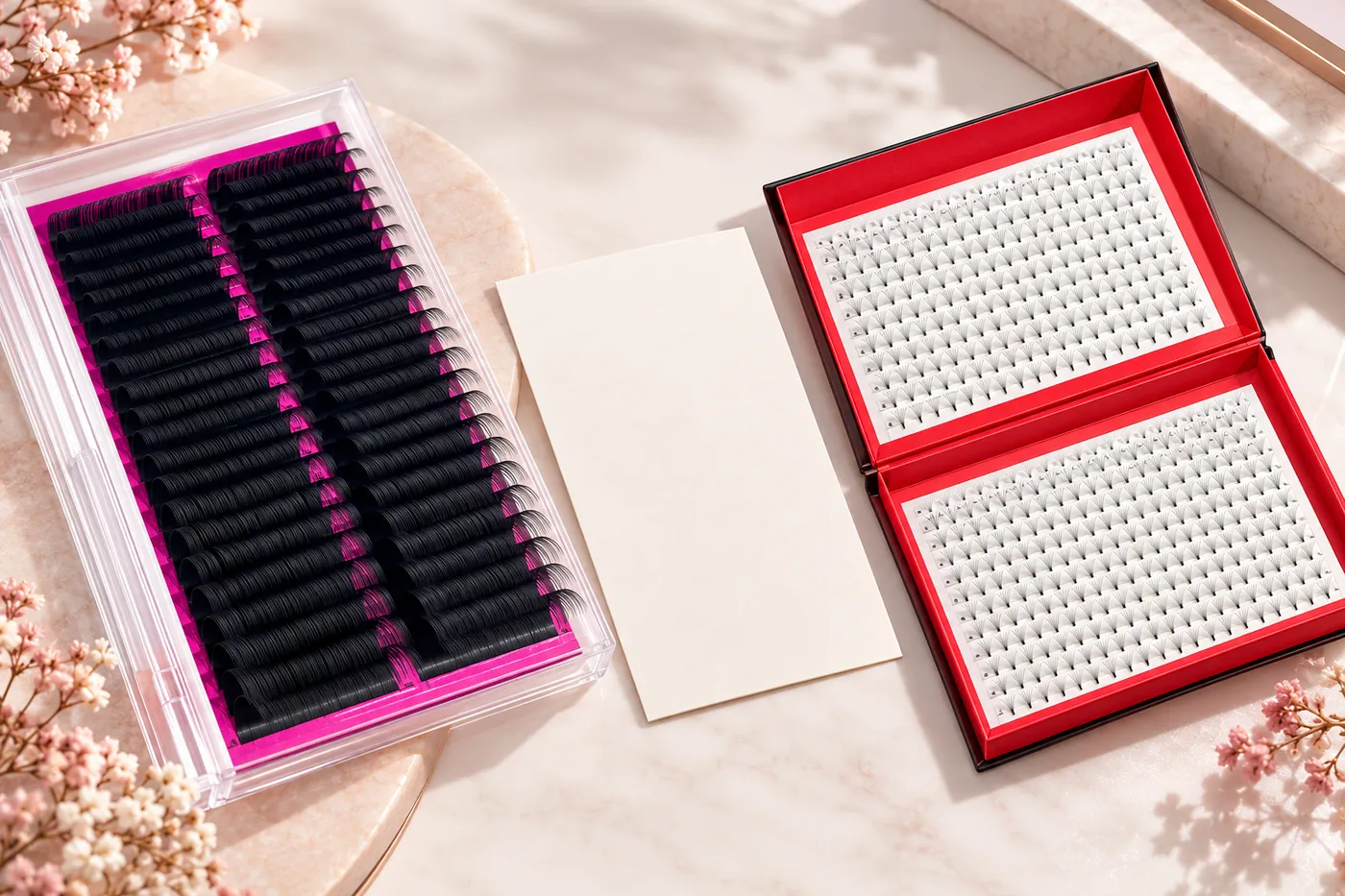
Separate Essential Features from Preferences
List the features that must remain stable for your business, then identify those you can review as alternatives. A working artist may prioritize pickup and base shape; a reseller may also need the existing holder and box to remain usable.
Keep the reference anonymous if necessary, but include enough detail to distinguish its construction. A clear product sample, top and side photographs, selected options and tray layout are more useful than a competitor's marketing description.
Start with the Closest Construction
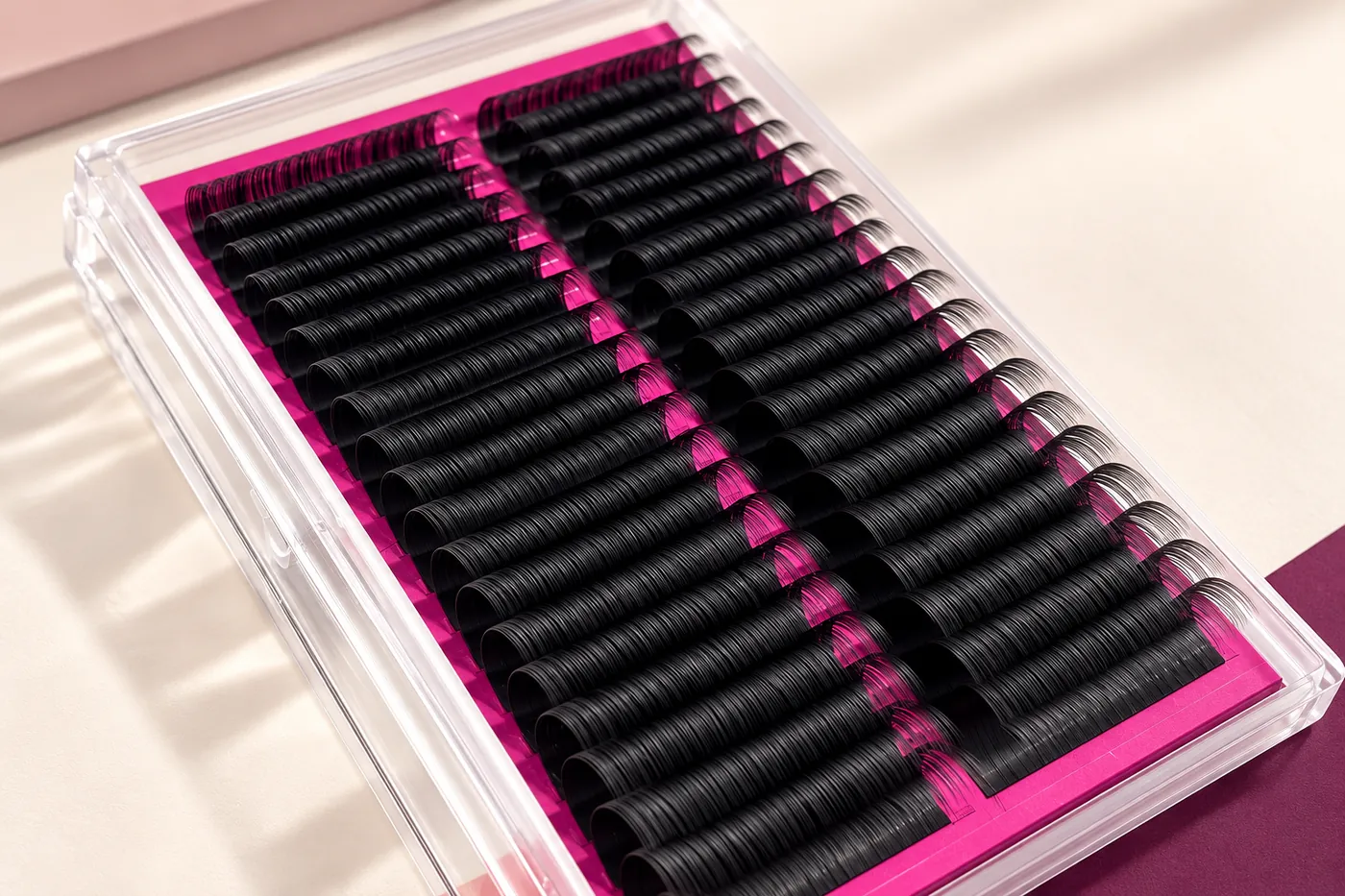
Our individual-extension tray reference lists several diameters, C through DD curls, and both single and mixed lengths. Use it when the existing product is an individual tray, then compare the selected configuration and actual sample.
The number of available options does not establish equivalence. A matching C label and 12 mm nominal length are only the start; fiber appearance, curl profile, row arrangement and pickup characteristics still need review against your reference.
Keep Flat and Round-Profile Comparisons Separate
Our ellipse flat-lash reference describes split tips, C or D curl, 0.15 or 0.20 mm nominal diameters, and 7–16 mm singles or a mix. The flattened cross-section makes it a different construction from an ordinary individual fiber.
Do not use the nominal diameter alone to infer equal weight or an identical visible result across those constructions. Compare the actual base, profile and accepted working sample. Keep a flat-lash substitution as its own qualification line.
| Comparison | Useful evidence | Insufficient shortcut |
|---|---|---|
| Curl | Side view beside accepted sample | Matching curl letter only |
| Flat construction | Base and cross-section reference | Nominal diameter alone |
| Tray value | Construction, rows and units | Price per tray alone |
Inspect the Details of a Flat-Lash Sample
Photograph the split tips and base against a neutral background, with the accepted reference beside the proposed sample. Keep lighting and orientation similar so that finish and silhouette can be compared fairly.
Record any visible difference and the intended user's handling feedback. Your approval notes should identify the exact sample and options, rather than describing every item in the flat-lash category as an interchangeable replacement.
Record Premade-Fan Features Independently
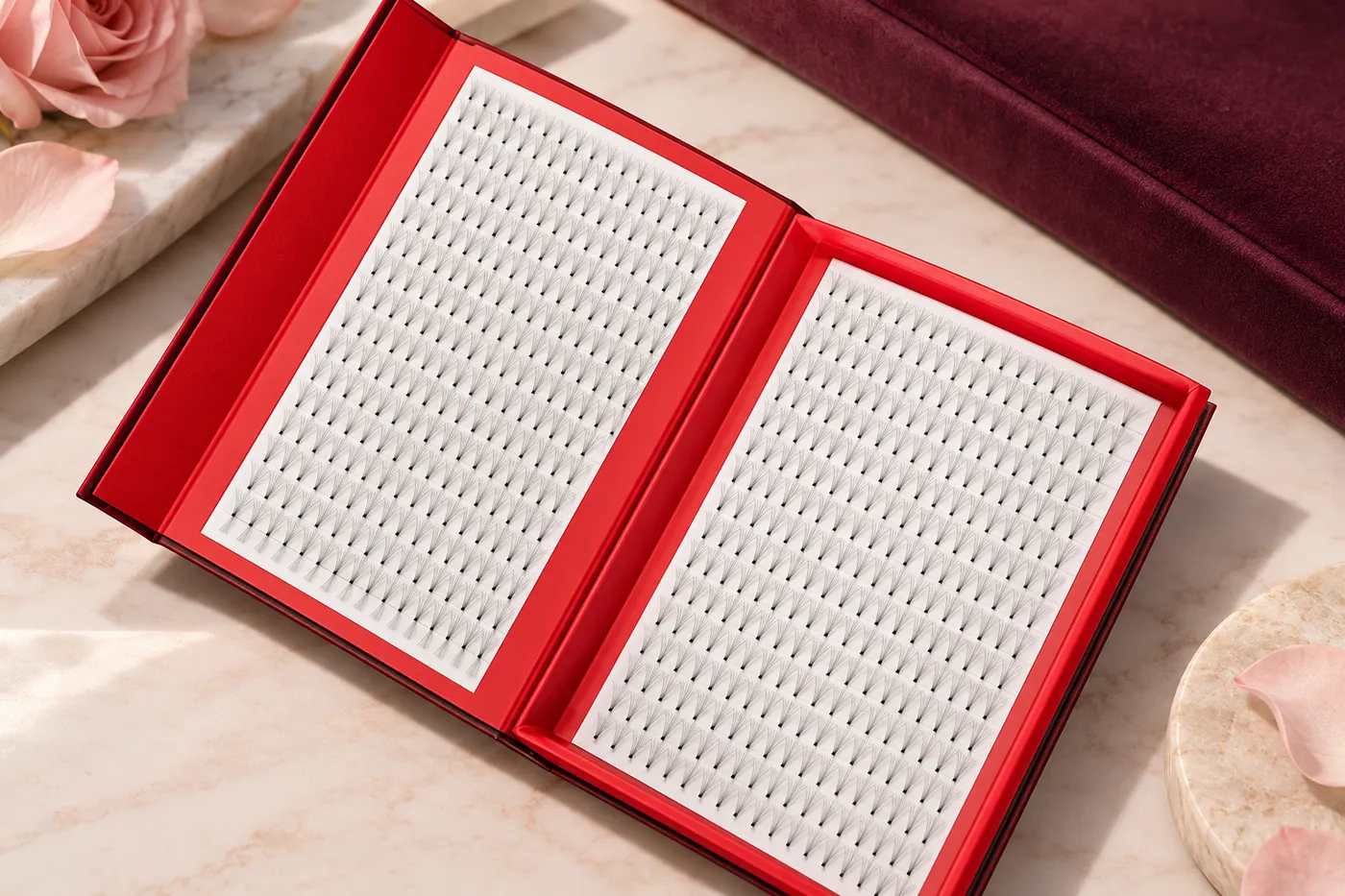
For a premade fan, record strand count, nominal fiber diameter, curl, length, opening and root appearance. Our linked family names fan formats from 2D through 10D, while the current selectors cover 0.07 or 0.10 mm, C or D, and length selections.
A request for a 5D reference therefore still needs its fan count and root criteria stated explicitly. A density name does not establish how narrow the root is or how the fan sits on its strip.
Use a Difference Log Instead of a Pass Phrase
For each proposed sample, note the feature observed, the difference from the reference and your decision. Keep accepted differences separate from changes still needed.
Illustrative record: ‘Version A retains the selected length and finish; outer profile differs; review a second sample before approval.’ This is a review format, not a statement about a tested batch. It makes the next sampling discussion more precise.
Check the Replacement as a Working Product
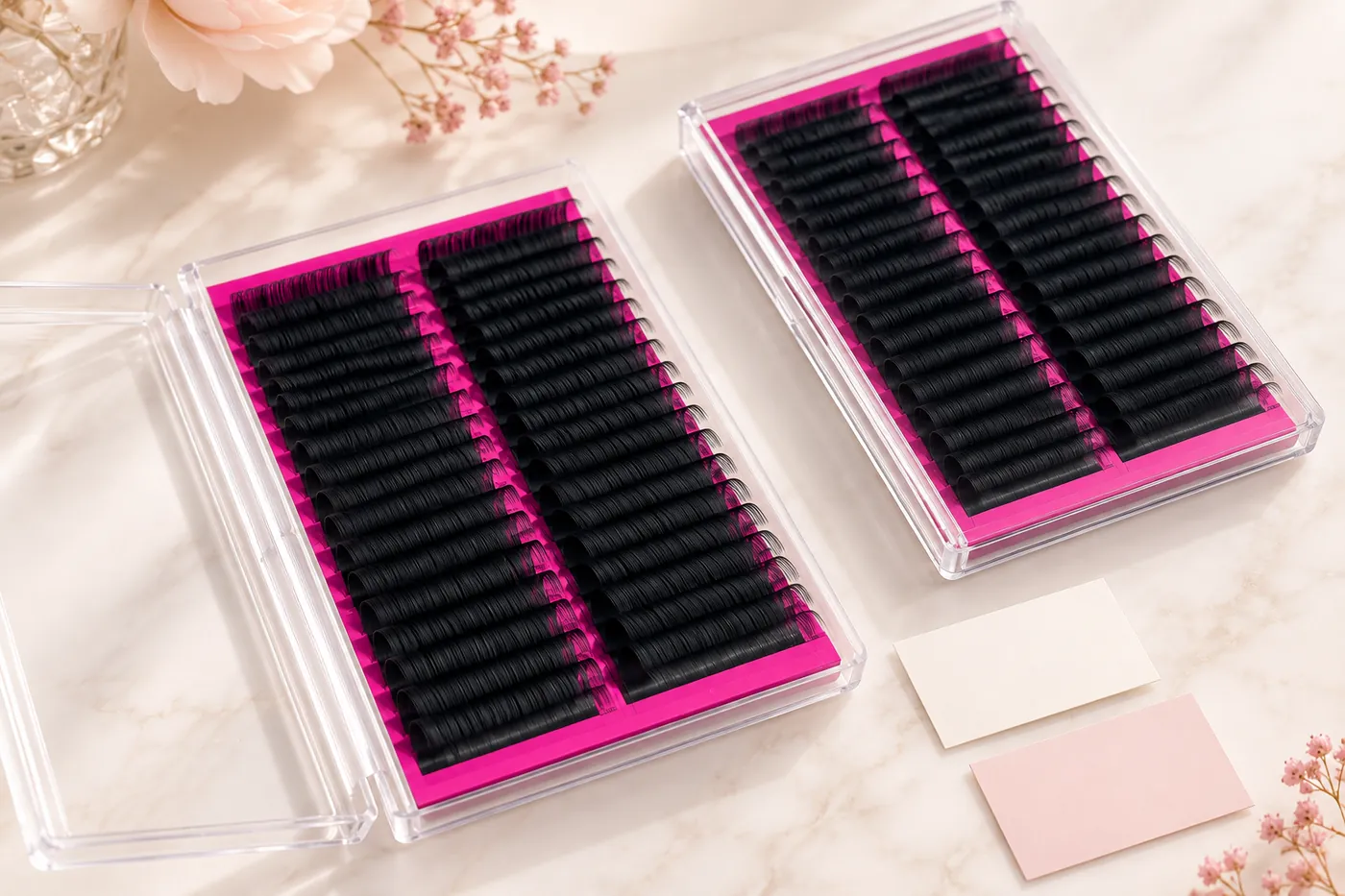
Compare the proposed sample through the intended professional workflow and with the packaging you plan to use. Keep the old and new reference identities distinct while the review is open.
A catalogue image can help shortlist a sample, but it cannot prove identical retention, processing, materials or manufacturing origin. Ask for the product information needed for your market and assess claims against the actual selected item.
Introduce the Accepted Reference Deliberately
Once the comparison is accepted, give the replacement its own internal code and keep the approval record. A controlled first order lets your receiving team check the agreed configuration before it becomes a routine replenishment line.
State any remaining packaging differences and the quantity basis in the quotation. Existing stock and incoming replacement stock should remain traceable instead of being mixed under a single ambiguous code.
Send a Comparison Brief with Clear Priorities
Share the reference sample or detailed photographs, exact dimensions or option information you have, tray and pack details, and the features you cannot change. Add the intended application, quantity and destination.
Use custom development when your goal is a new construction rather than an alternative source. Use the salon-chain guide after a replacement has been accepted and the task becomes repeat ordering across locations.
Discuss your reference sample