
Private Label DIY Lash Books with a Defined Row Map
A lash book is easier to source when its row arrangement is part of the product identity. We can review a selected book reference, its cluster construction and your branding brief, with each visible style and row accounted for.
Our catalogue includes 12-row DIY lash-book references described as 0.07 mm PBT in D curl. Their density mixes differ. Keep the chosen product and accepted internal layout together instead of treating a shared pink cover as a complete specification.
Explore DIY cluster lashes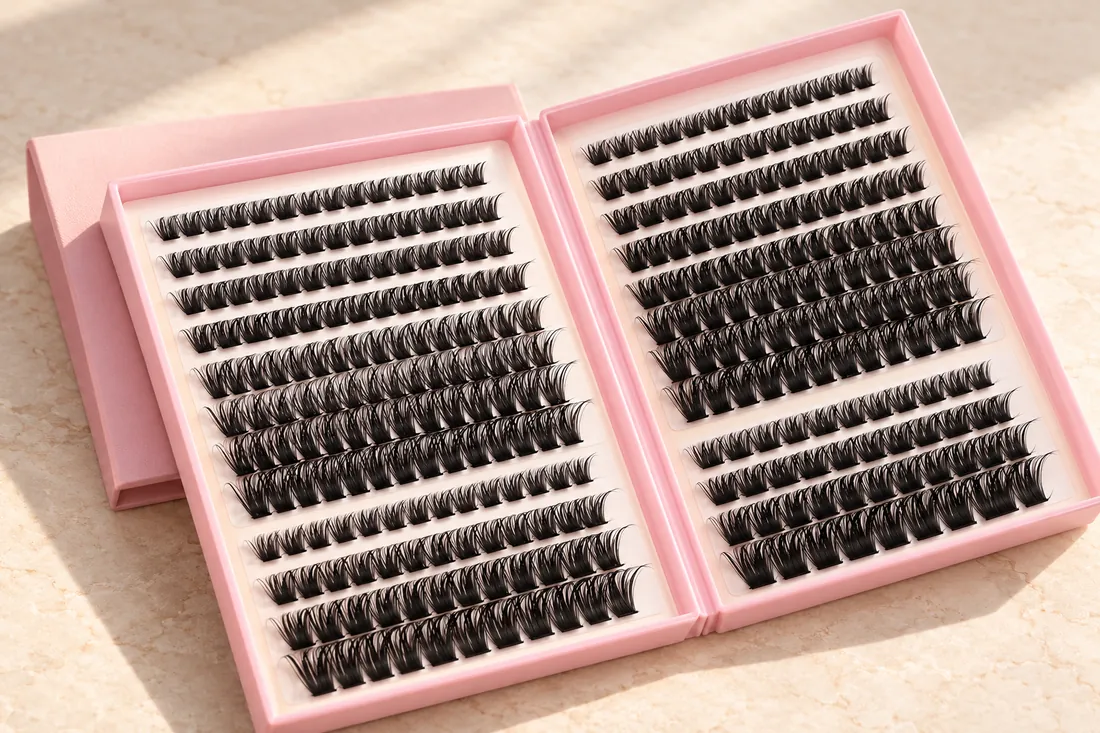
Give Each Book a Clear Role in the Range
Decide whether a book offers one repeatable look or several density choices. A style assortment may be useful for exploration, while a repeat purchase benefits from a stable row map and recognizable reference.
Do not add several nearly identical books simply to enlarge the range. Compare the actual contents and keep a separate retail identity only where the buyer receives a meaningful difference in cluster construction, density selection or layout.
Compare the Listed Density Mixes
The linked 5260 reference names a mix of 30D, 40D, 50D, 60D, 80D and 100D. The 5237 and 5209 references name 40D, 50D, 60D and 80D mixes. All three describe a 12-row D-curl, 0.07 mm PBT format.
Those shared fields do not establish identical segment shape, base width, case dimensions or counts. Compare the actual product photographs and accepted samples, then retain the chosen reference rather than swapping between similar listing titles.
Keep Rows, Segments and Density Separate
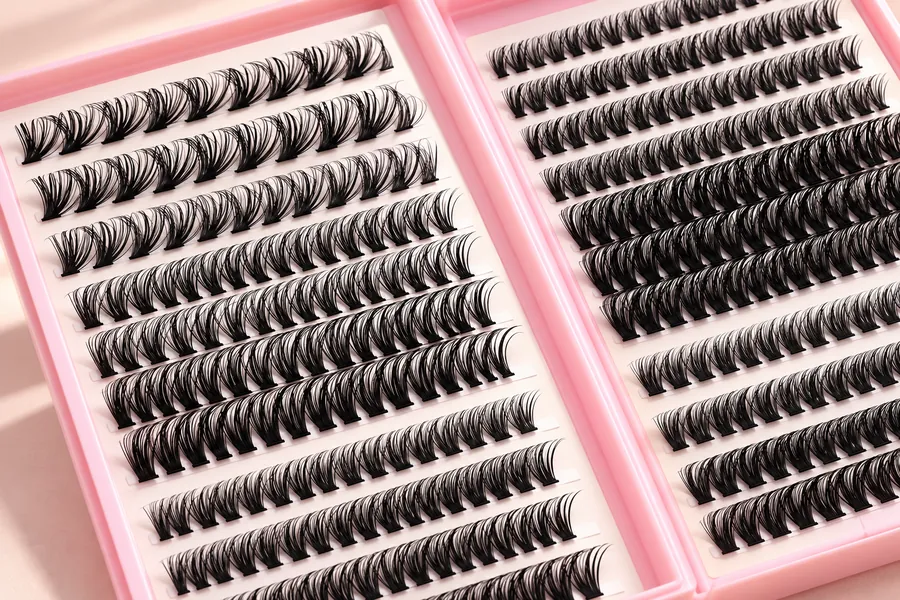
Twelve rows describe the arrangement of the tray or book. A density label describes the cluster format; it does not state how many separate segments are in each row.
Count segments on the accepted layout and record the row allocation before writing the retail quantity. Do not infer a fixed number of applications from the row count, because the number of segments a customer uses is not established by the book's cover or density names.
| Field | Meaning in the order | Do not infer |
|---|---|---|
| 12 rows | Number of arranged rows | Total segment count |
| 40D or 80D | Identified density format | Rows allocated to that format |
| 0.07 mm | Nominal fiber diameter | Segment base width |
| Mixed book | Several selected formats | A universal number of applications |
Freeze the Row Map Before Printing
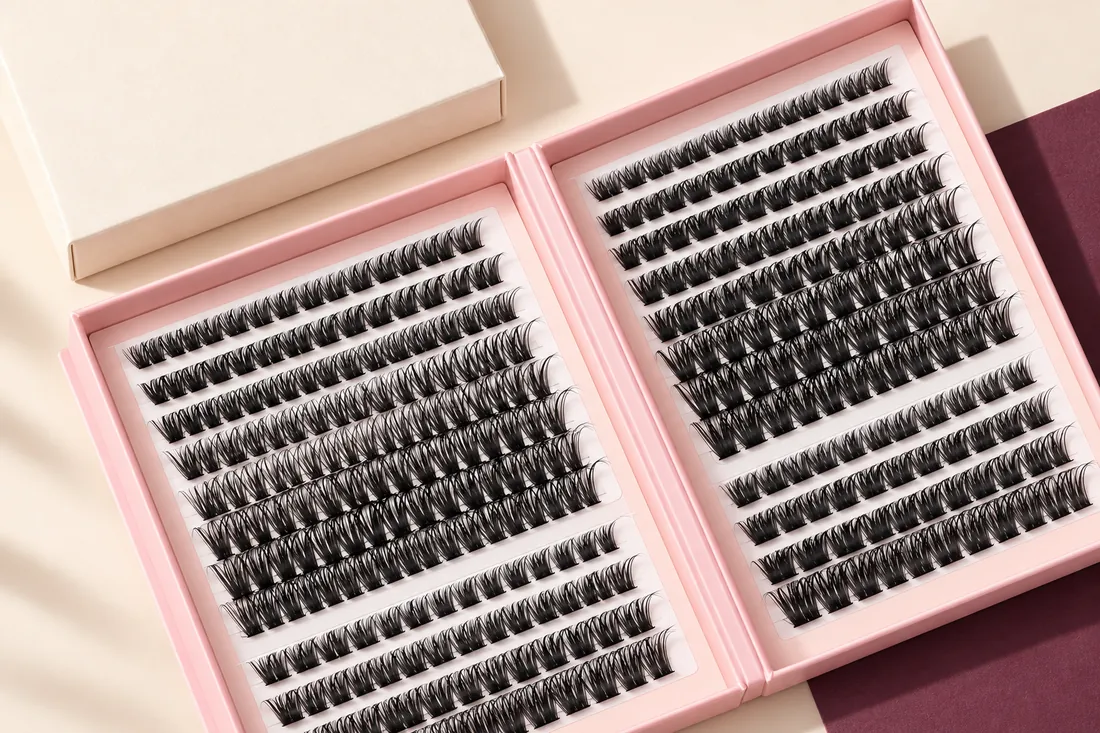
Prepare a row-by-row sheet naming the selected cluster format, length information and segment count. Match it to a clear photograph of the open book so artwork and contents are reviewed against the same arrangement.
If you want a different mix from the listed reference, identify that as a proposed change. The drawing is a development brief until the sample and quotation confirm the feasible arrangement; it is not an existing configuration merely because it fits twelve rows.
Keep a Lash Book Distinct from a Complete Kit
The lash-book references establish lash contents, not automatic inclusion of bond, seal, applicator or remover. A book can be the lash component of a separately defined kit, but the rest of the contents need their own references and review.
This distinction keeps the online description accurate and prevents a packaging photograph from implying that supporting products are inside the box.
Review Bases and Fibers in the Sample
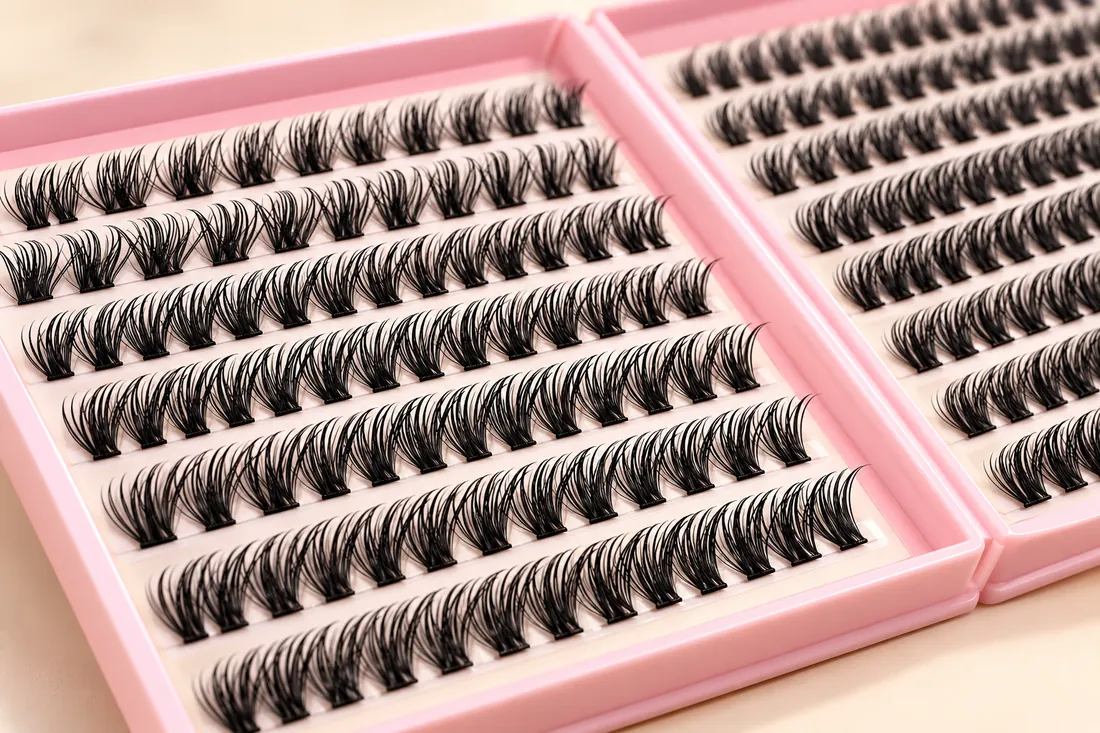
Use a close view to compare the base profile, fiber pattern and the separation between neighbouring clusters. Keep the book open in a reference photograph so the accepted cluster style can be located by row.
Record the appearance and handling observations from the selected sample. A shared PBT or curl description does not establish identical feel or performance across every book in the family.
Match the Cover Information to the Contents
Keep the product identity, curl, nominal fiber diameter, row layout and any stated segment count consistent between the book, outer sleeve and product page. Review the actual printed area before placing detailed information on a narrow panel.
Give the artwork a version code. If the row map changes, revise the contents description and proof together rather than leaving an old density list on a newly configured book.
Quote One Defined Book Configuration
Compare the same case format, lash arrangement, retail pack and quantity. A lower price for a book with fewer segments or a different density mix is not a like-for-like comparison.
Keep lash-book quantity, printed sleeve quantity, sample work and delivery scope visible on separate lines. The project minimum and timing depend on that selected configuration and any customization, not on a general claim about every book.
Send the Reference and the Row Allocation
Send the chosen product link, desired density mix, row map, segment-count requirement and pack format. Add your brand artwork, market, destination and planned quantity.
Continue to the refill guide if the aim is to replace an accepted lash selection. Use the custom-development guide if you need a new cluster construction, rather than only a different cover or density allocation.
Discuss your lash book project