
Lash Salon Chain Replenishment by Variant and Location
Several salons need the same approved product identity and different quantities. We can review a recurring lash order built around exact tray variants, branch demand and receiving requirements, with our Qingdao factory as your sourcing contact.
Start with a variant register shared by purchasing and the working artists. Curl, diameter, length and tray format belong on that register. A broad label such as volume lashes leaves too much room for an unintended substitution.
Explore professional tray references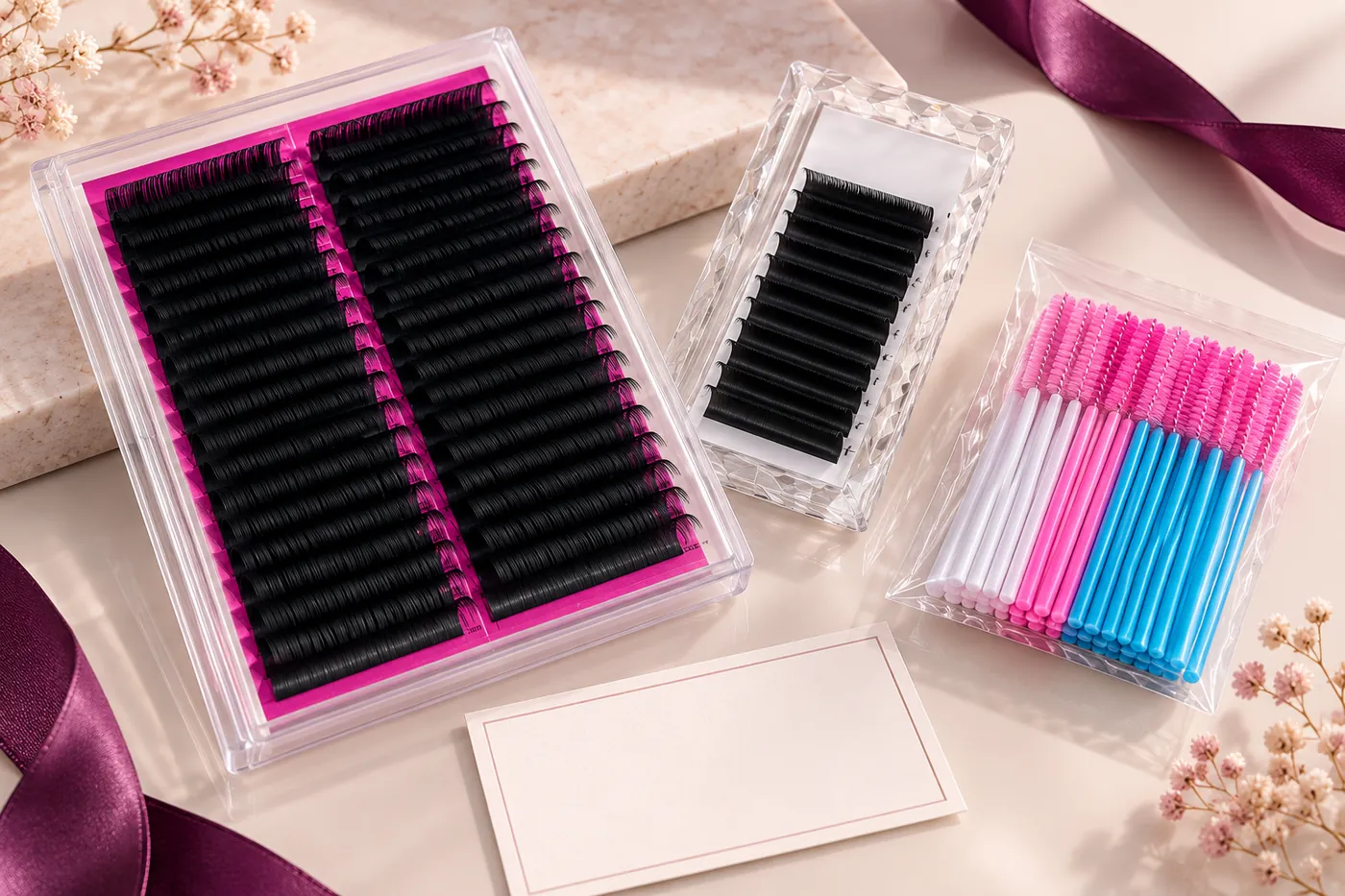
Build One Variant Register for Every Branch
The individual-extension tray reference offers C, CC, D and DD curls, individual lengths and mixed-length ranges. The 12-row easy-fan reference is a different construction even when its selected curl, diameter and length look similar on paper.
Give each approved configuration an internal code. Keep the product link and a sample photograph behind that code, then let branches report demand in trays of that configuration. This separates standardization of the product from the quantity each location needs.
| Internal example code | Product identity | Reorder unit |
|---|---|---|
| VOL-C-07-10 | Individual tray · C · 0.07 mm · 10 mm | Tray |
| VOL-C-07-M | Same family · C · 0.07 mm · 8–14 mix | Tray |
| EF-D-07-12 | Easy-fan tray · D · 0.07 mm · 12 mm | 12-row tray |
Illustrative internal codes; the linked product and accepted sample remain the reference.
Keep Easy-Fan and Individual Trays Distinct
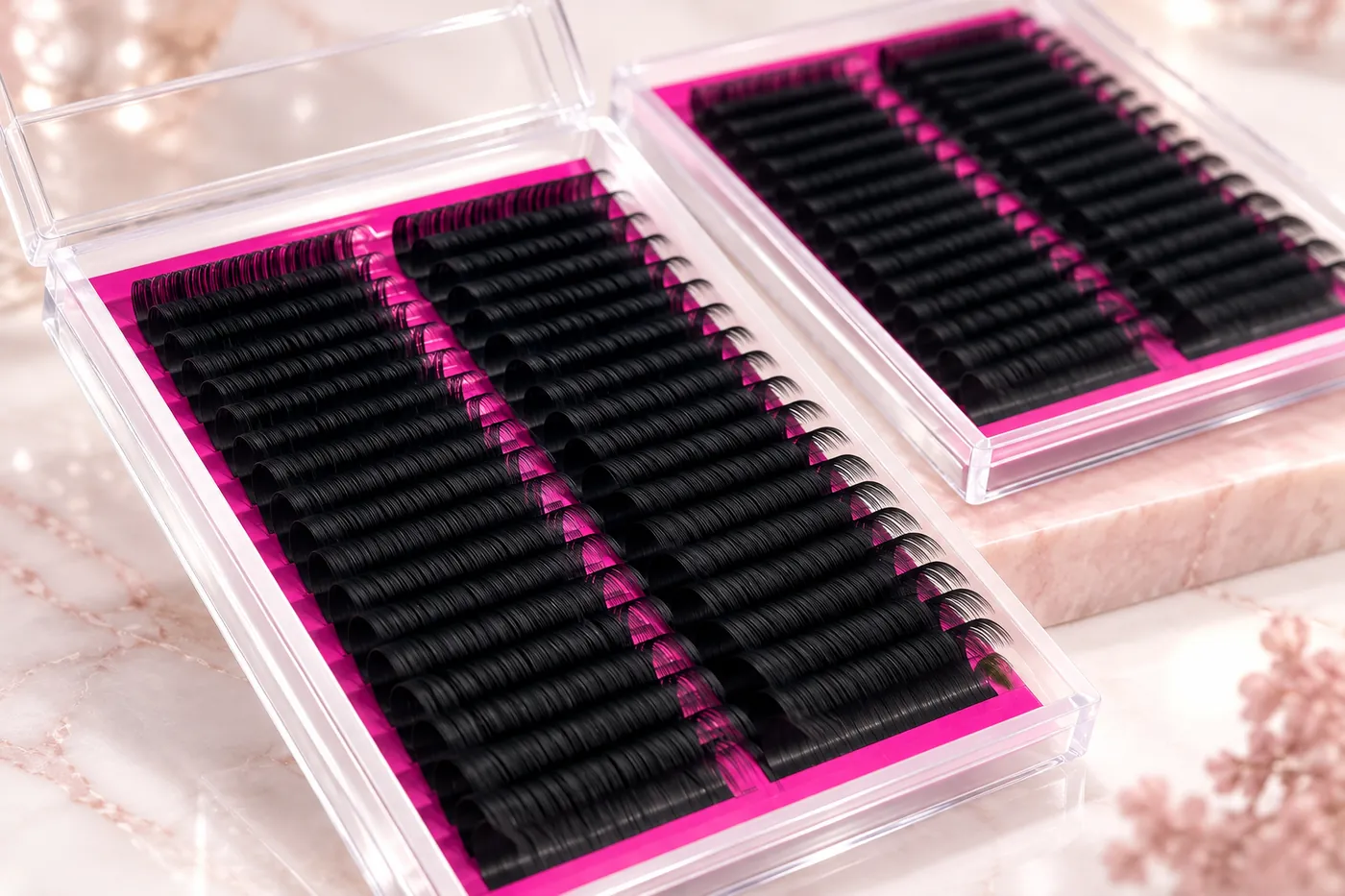
Our dark-matte easy-fan listing describes a standard 12-row tray, with 16 rows discussed as a custom request. Its options include 0.03, 0.05, 0.07 and 0.10 mm, C through DD, single lengths and selected mixed ranges.
A branch using an accepted 12-row easy-fan tray should not receive an individual tray or a different row count merely because the nominal length matches. Record the construction and rows per tray in the approved line, especially when comparing cost per tray.
Calculate Demand from Consumption and Coverage
Use actual consumption by variant rather than splitting the same quantity evenly between branches. A location doing more work with one length may need that single-length tray more often than a mixed tray.
Planning example: four salons each using six trays per week consume 24 trays weekly. Five weeks of coverage equals 120 trays. If 35 usable trays are on hand and 20 confirmed trays are inbound, the calculated gap is 65 trays. This arithmetic is an inventory example, not a delivery-time or minimum-order promise.
Sample Across the Variants Artists Use
Choose samples that cover the construction and option combinations central to the salons' work. Use the individual and easy-fan references as separate sample groups and record the branch or artist responsible for the review.
A short sample record can capture pickup behaviour, visible curl, fiber finish and the approved row arrangement. Evaluate use through the intended professional process; a photograph cannot establish retention or suitability for every client.

Choose a Receiving Model Before Packing
A central warehouse can receive one consolidated assortment and allocate it internally. Direct branch allocations require separate counts and clear destination information. State which model you need rather than assuming the same packing works for both.
Keep total quantities and branch quantities on the same sheet. If 65 trays are being allocated, the branch columns must sum to 65 for the same variant. Labels and packing lists should carry the same internal variant code.
Replenish Consumables in Their Actual Packs
Disposable mascara wands are a supporting line, not another tray variant. The linked reference describes nylon brush heads and plastic handles. Record pieces per pack and branch demand before comparing its pack price.
Keep brushes, pads, tape and adhesives in separate reorder groups because their consumption and storage conditions differ. Shared branding does not make every consumable use the same sample approval or shelf-life schedule.

Keep Repeat Supply Tied to the Approved Reference
Retain a labelled sample and photographs from the accepted configuration. Carry that reference forward on each repeat order, including its packaging version and any agreed changes.
A change in tray arrangement, finish, packaging or construction should be discussed as a change, rather than passed through under the old internal code. This keeps branch feedback meaningful when several locations compare the same line.
Set a Review Rhythm and an Exception Route
A simple review sheet can show recent consumption, usable stock, confirmed inbound quantities and the next required receipt date. Review slow-moving variants separately from lines that repeatedly run short.
Mark exceptions clearly: a new curl trial, a packaging change or a branch opening belongs outside the routine repeat quantity. We can then review the stable repeat lines and the new requirements without mixing their approval status.
Share the Variant and Allocation Sheet
Send the approved product links, internal codes, recent consumption, quantity by variant and branch allocation. Add the receiving model, destination, next required date and any line that needs a fresh sample.
Use the mixed-wholesale guide for a new assortment across several product families. Use the time-bound replenishment guide when the main challenge is a fixed event or receipt date. This page keeps the focus on repeat supply across your salons.
Discuss your salon replenishment brief