
Mixed Wholesale Lash Orders for Distributors and Salons
A mixed order needs more than a long product list. Give each tray, tool and aftercare item its own specification, unit and quantity, then bring those lines into one packing and delivery brief. We work with overseas business buyers sourcing from our Qingdao lash catalogue.
Our range includes individual extension trays, DIY clusters, strip lashes, adhesives, cleansers and tools. Select the product families your customers actually use, and avoid treating the presence of several categories as proof that they share one minimum or delivery condition.
Start with professional lash supplies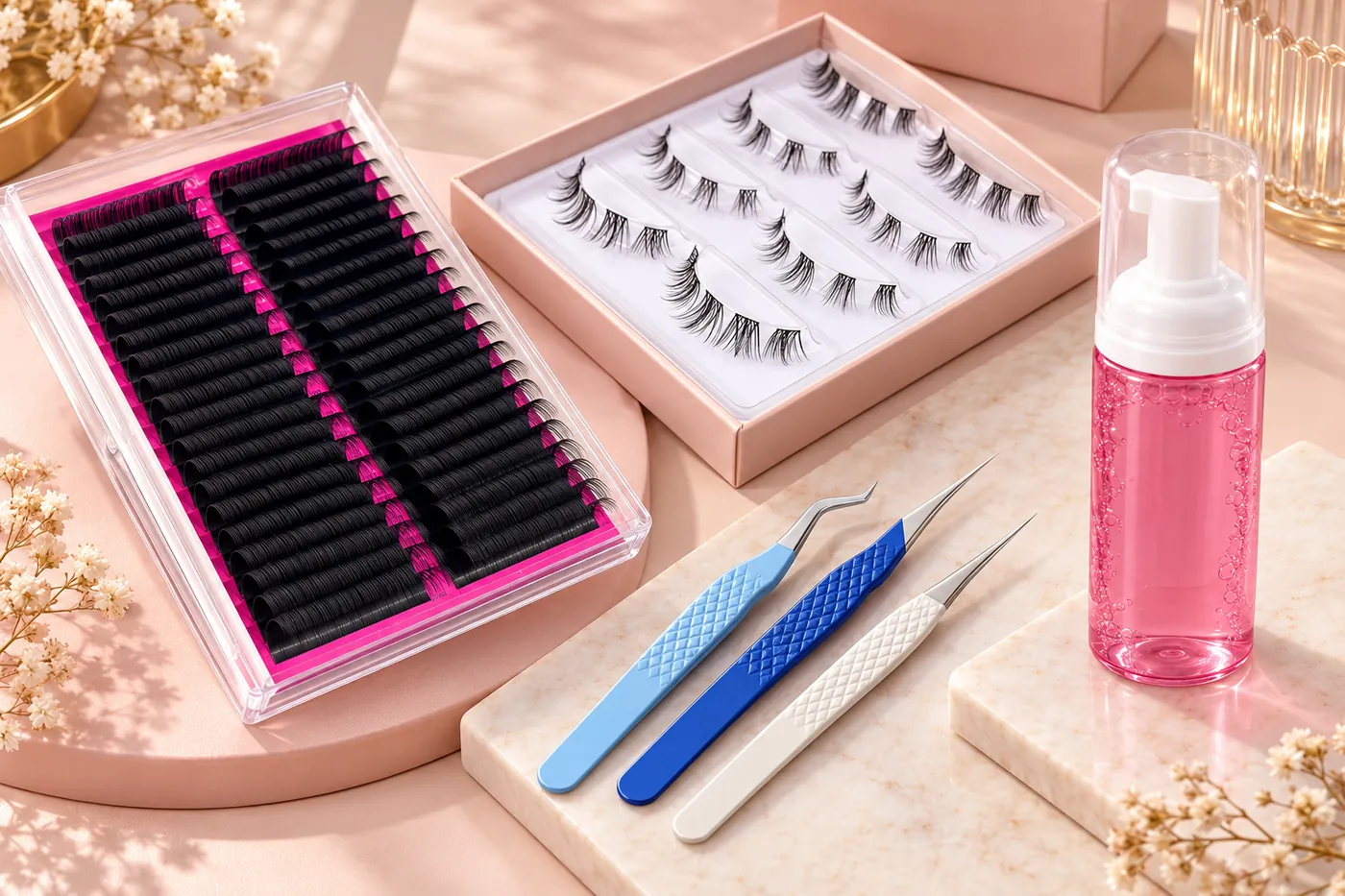
Build the Assortment Around Working Demand
Separate repeat-use lines from trial lines. A distributor can group established tray variants as the core assortment, add selected tools as supporting lines and keep unfamiliar lash formats in a smaller sampling group.
Keep professional application and consumer DIY offers distinct in your stock system. A professional extension adhesive and a DIY bond-and-seal product are different order lines, even when both sit beside lashes in a catalogue.
Reduce a Broad Tray Listing to Exact Order Lines
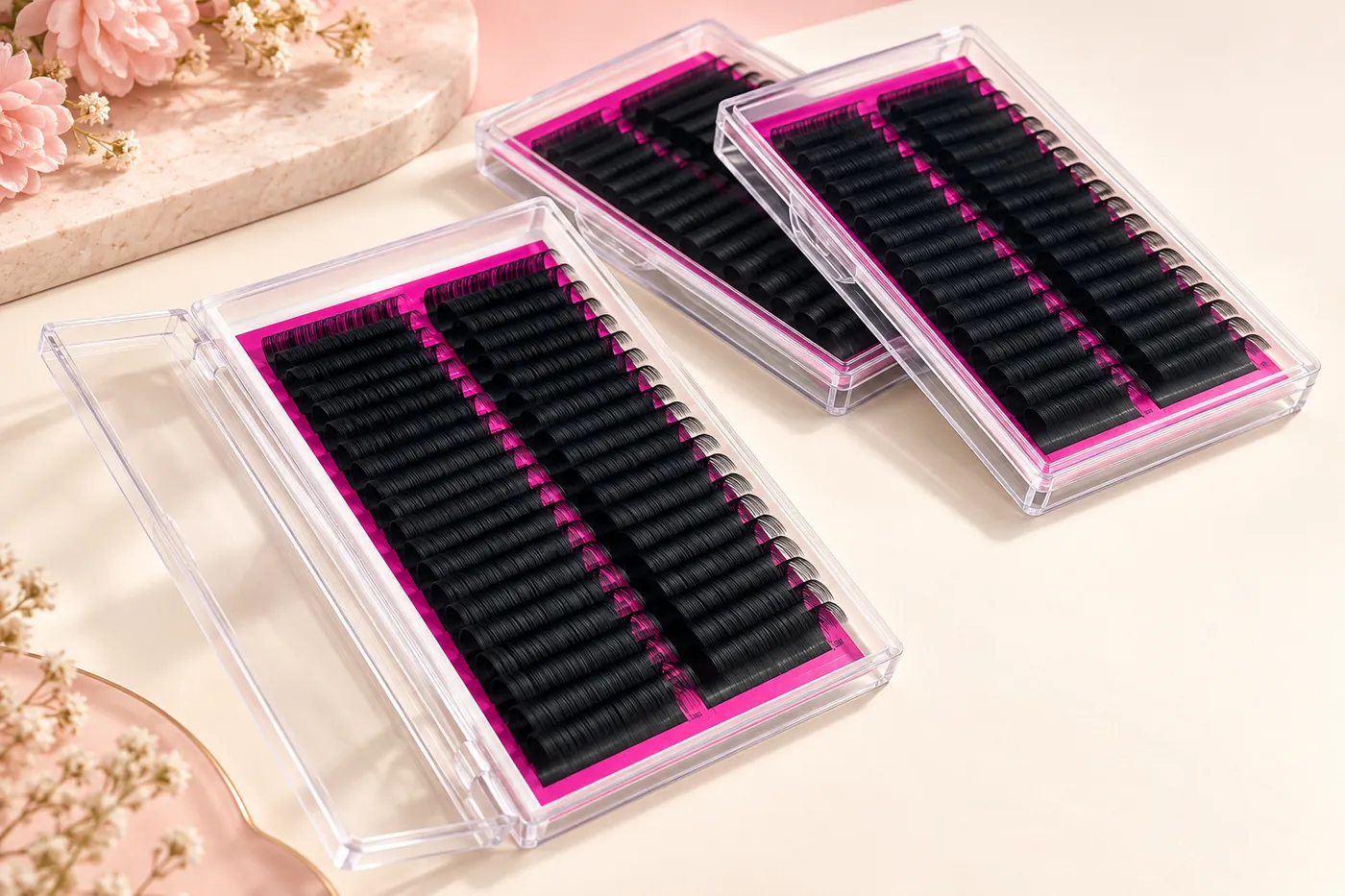
The linked individual-extension tray has C, CC, D and DD curls and several nominal diameters. Its length choices include individual lengths and three mixed ranges: 8–14, 15–20 and 20–25 mm.
A line such as ‘0.07 mm, C curl, 10 mm, 20 trays’ is distinct from ‘0.07 mm, C curl, 8–14 mm mix, 20 trays’. Do not combine those under one quantity called mixed lashes. Keep the actual selected options attached to the product link.
Use the Correct Counting Unit
Tray, pair, piece, bottle and pack describe different quantities. A disposable-brush pack still needs its pieces-per-pack confirmed; a price per pack cannot be compared directly with a price per brush.
Illustrative arithmetic: three tray variants at 20 trays each produce 60 trays. Adding 10 tweezer pieces makes 70 counted units across the purchase order, but it does not make a useful common price unit. Compare each line in its own unit and combine values only after quantities and pricing are clear.
| Line | Order unit | Extra field |
|---|---|---|
| Extension lashes | Tray | Curl, diameter, length and layout |
| Strip lashes | Pair or defined multipack | Style and pairs per pack |
| Tweezers | Piece or defined set | Selection code and tip |
| Cleanser | Bottle | Capacity, formula and retail pack |
Keep Tools and Aftercare Identifiable
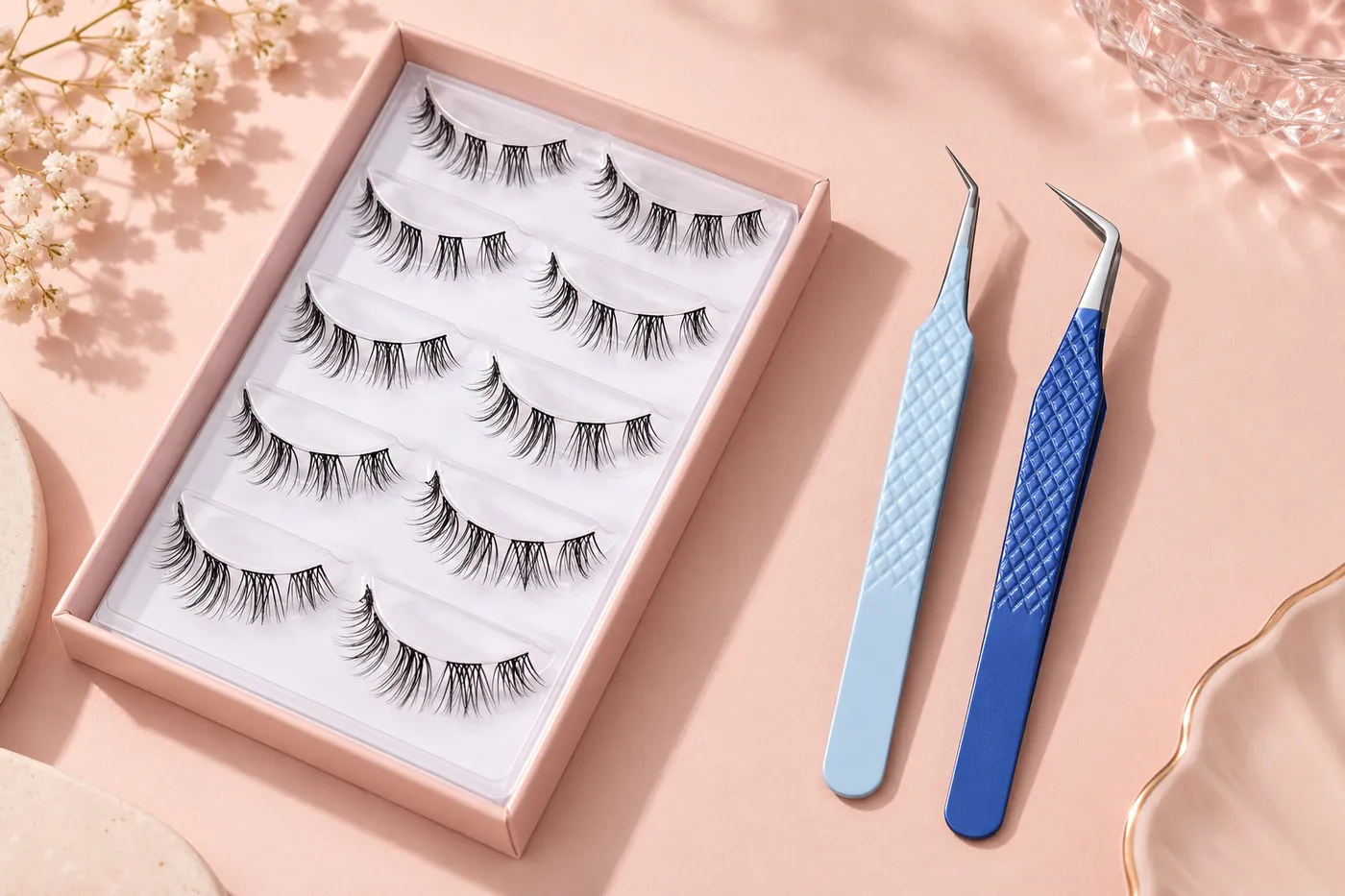
The stainless steel tweezer listing offers seven coded selections. Carry the selection code and tip reference into the order, rather than ordering by handle colour alone.
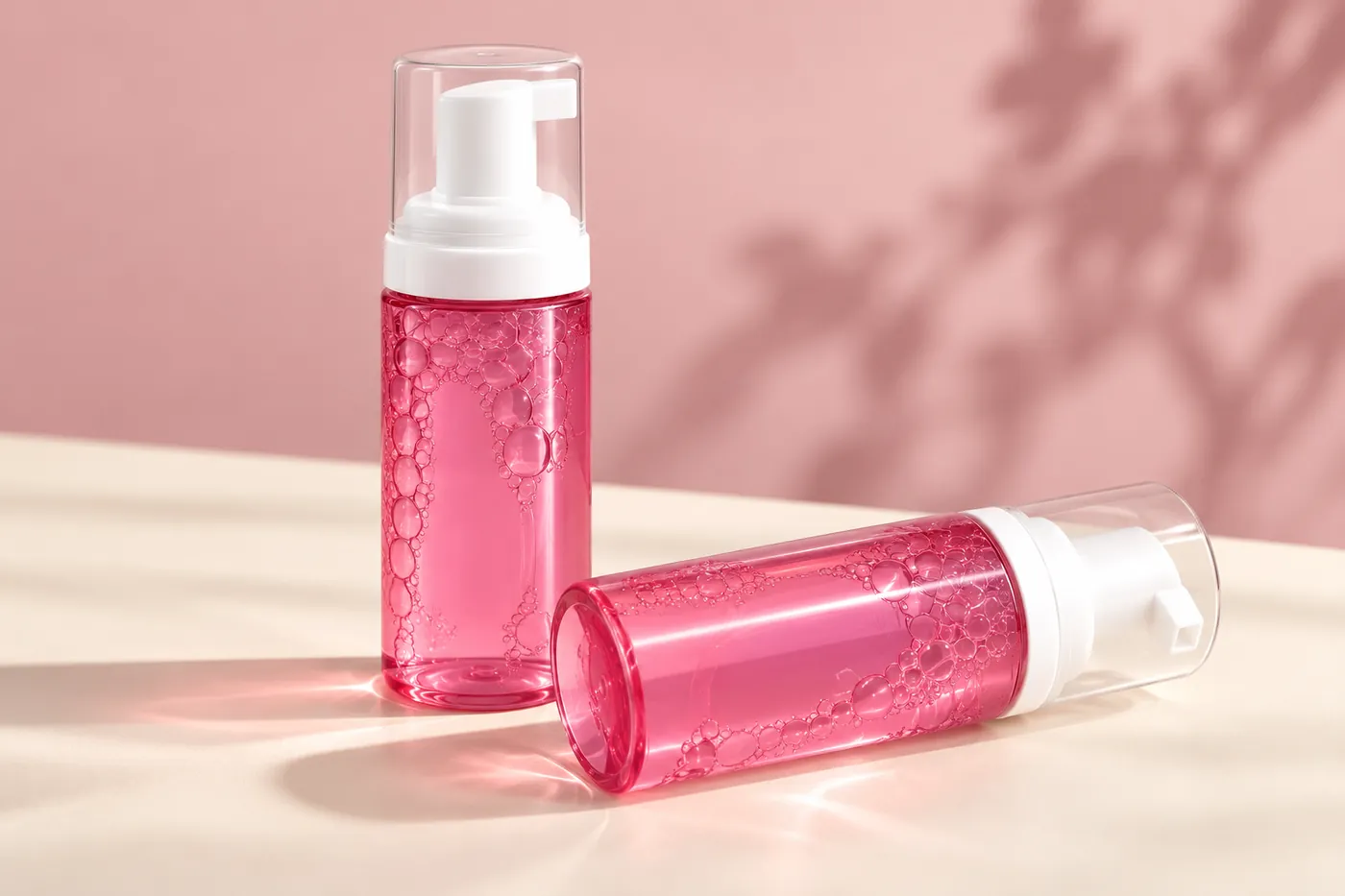
The foam-cleanser listing names 30 ml and 60 ml presentations. Its bottle capacity, ingredient information, label and carton need to be reviewed as cleanser details. Unrelated lash-length options on a product record are not a bottle specification and should not be copied into your purchase order.
Use One Assortment Sheet with Separate Lines
Give each purchase line a buyer code so that quantities and approvals stay linked through the discussion. A catalogue SKU by itself may not distinguish all records and options; the product URL and full configuration are the safer reference.
Add the retail pack and inner-pack requirement in separate columns. This lets us review a mixed request without guessing whether the requested quantity means trays, boxes, tools or master cartons.
| Example buyer line | Configuration | Quantity basis |
|---|---|---|
| TR-C10 | Linked tray · 0.07 mm · C · 10 mm | 20 trays |
| TR-CM | Same tray · 0.07 mm · C · 8–14 mix | 20 trays |
| TW-01 | Linked stainless tool · selected code | 10 pieces |
Illustrative order-sheet structure, not a stocked bundle or minimum-order offer.
Review More Than the First Tray Sample
Sample across the product families you intend to buy. A tray sample checks fiber appearance and layout; a tweezer sample checks the selected tip; a printed bottle or carton proof checks a different part of the order.
Record approved references per line, then mark which lines can share packaging and which need individual labels. This prevents one accepted sample being treated as approval for every item in a mixed shipment.
Plan Pack Identification Before Dispatch
Ask for pack labels that let your receiving team distinguish similar variants without opening every tray. Your buyer line code, variant description and quantity belong together on the packing information.
For a mixed order, share your preferred carton grouping and whether branches or resellers need separate allocations. These are packing requirements to agree in the quote; the product images do not establish an automatic consolidation or dropshipping service.
Compare the Quotation Line by Line
Compare the same configuration, unit and quantity on each line before judging the total. Keep sample work, custom printing and delivery charges visible, especially when a bottle or printed component has a different minimum from a lash tray.
State the destination and desired receipt date. Discuss product readiness, any split shipment and the delivery quotation basis together. A general delivery phrase in an individual listing does not define the schedule for a mixed, customized assortment.
Send a Mixed Order We Can Review Together
Attach your assortment sheet with product links, selected options, quantity per line, retail-pack needs and destination. Mark the lines that need samples and those that are repeat references.
Use the salon-chain guide when you need branch allocations and recurring replenishment. Use the new-studio guide when you are still deciding which working supplies belong in the first order. Those routes solve different tasks from assembling a distributor's mixed purchase.
Discuss your wholesale assortment