
First Wholesale Lash Supply Order for a New Studio
Your first studio order should follow the services you are trained and equipped to deliver. We can review the lash trays, working tools and supporting supplies as separate lines, so the list reflects a professional workflow rather than an oversized generic kit.
Begin with the intended service, the artist's accepted product references and the number of working stations. Our Qingdao catalogue provides several starting points, but a complete purchase list still needs clear variant, compatibility and pack-unit decisions.
Explore professional lash supplies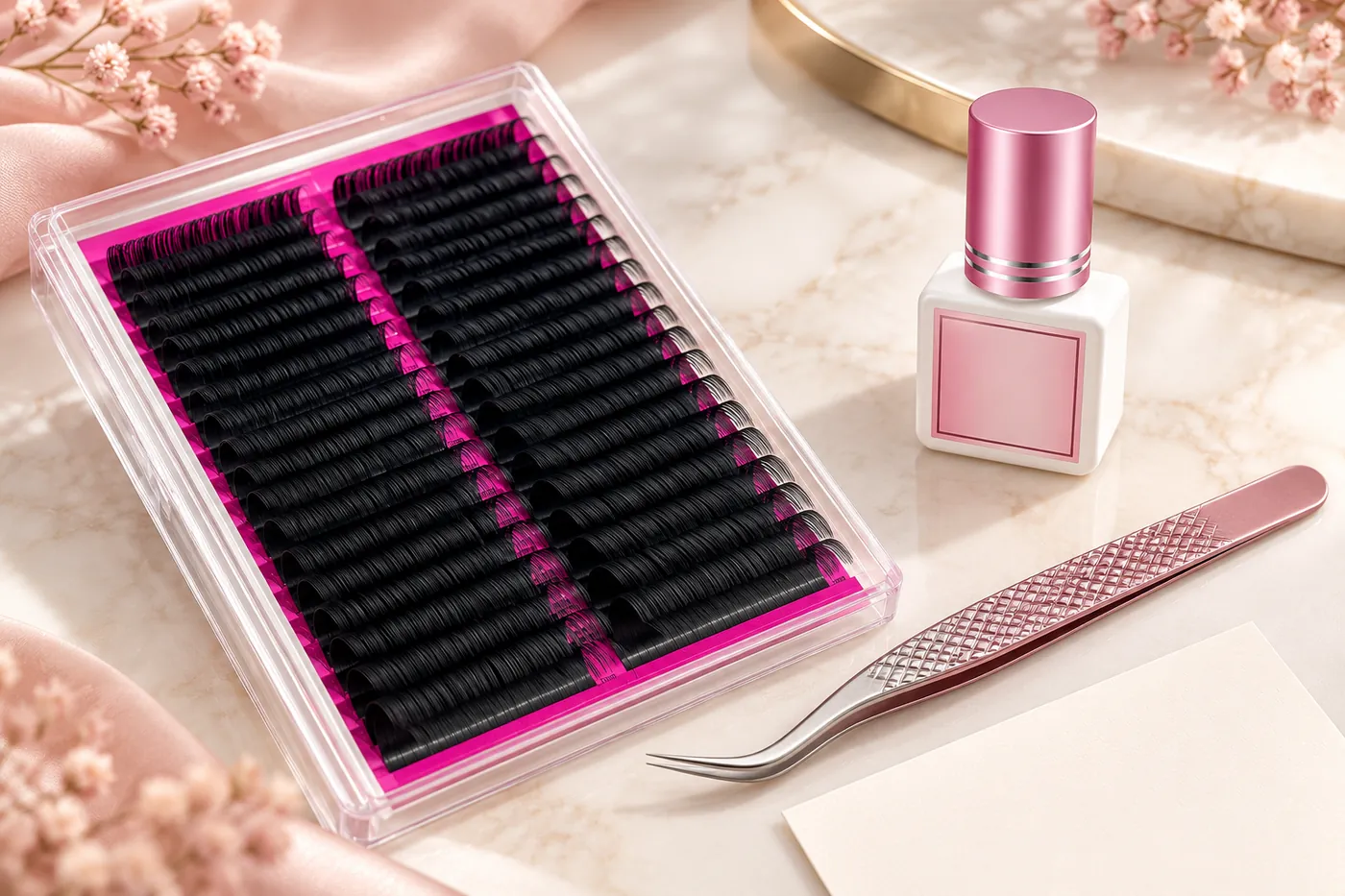
Build the List Around the Working Station
Group the order into lashes, bonding products, working tools, preparation supplies and storage. Distinguish reusable tools from consumables so that their quantities are not calculated in the same way.
Two working stations do not automatically require two of every bottle or two packs of every tray length. Let the trained working team identify which products are shared, which are station-specific and which need a backup.
Choose Tray Variants for Your Service Menu
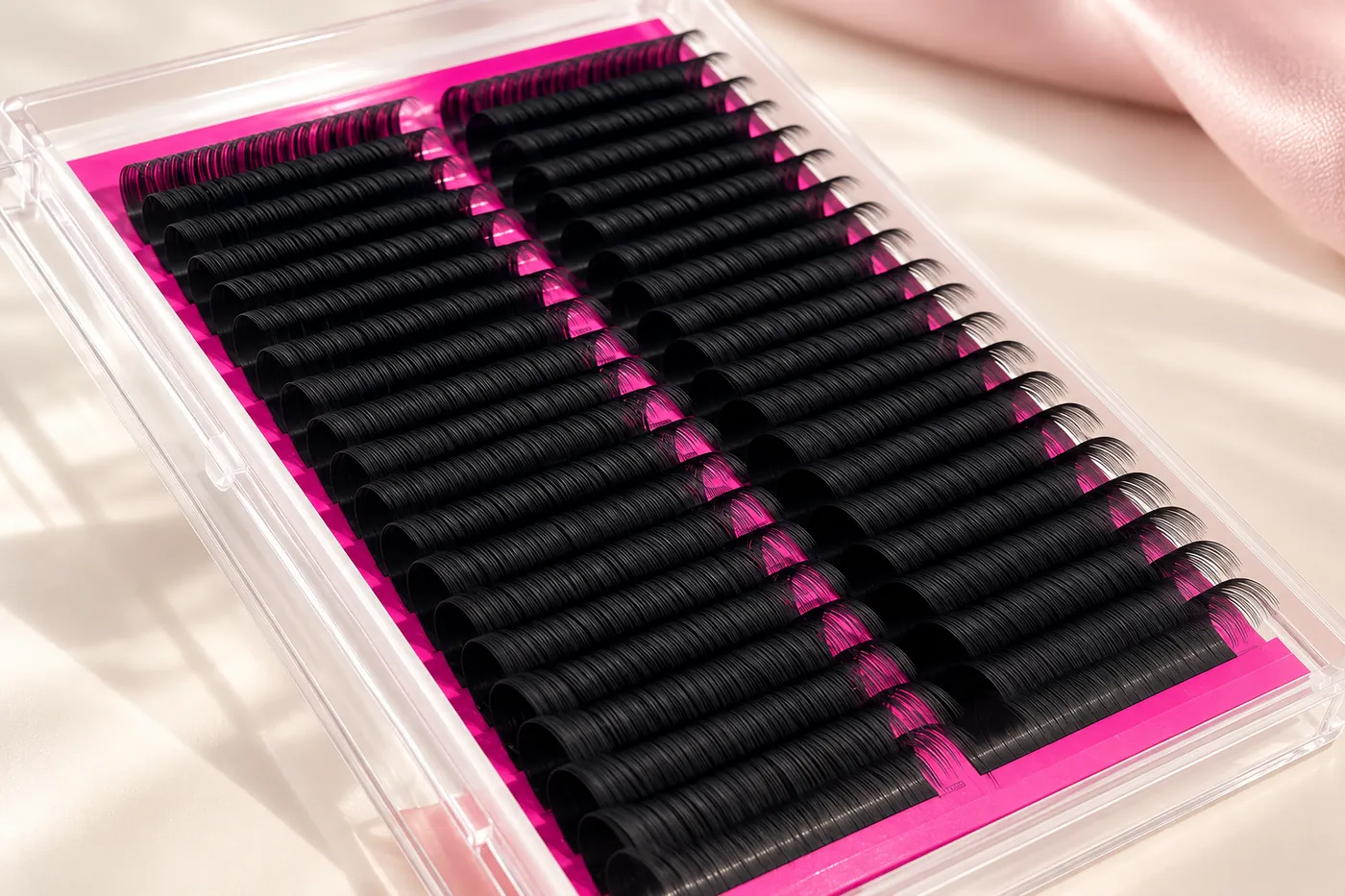
Our individual-extension reference offers C, CC, D and DD curls and several nominal diameters. Single lengths and mixed ranges are separate selections; an 8–14 mm mix is a different order line from an individual 12 mm tray.
Ask the artist to shortlist the configuration used in their actual technique. A mixed tray can support a range review, while repeat demand may later justify selected single lengths. The correct starting assortment follows the service plan, not the largest possible option count.
Review Adhesive Information Before Selecting a Bottle
Our professional-extension adhesive reference is a different product from DIY bond and seal. The listing states a drying-time range, but it does not give enough working-condition information to treat that as a guaranteed result in your studio.
Request the selected adhesive's instructions, working temperature and humidity guidance, storage information, ingredient or safety information and relevant batch details. Have the trained user review those requirements before ordering; nominal drying speed alone is not a complete selection basis.

Match Tweezers to the Technique
The stainless steel tweezer reference has seven selection codes. Review tip shape, contact area and the intended isolation or pickup task with your artist, using the selected tool and close photographs.
Plan reusable tools by station and working role rather than choosing an assortment for colour alone. Keep a backup-tool decision separate from a claim that every style performs the same task.
Calculate Consumables by Their Pack Contents
The pad reference is described as a 50-pair set. That counting basis differs from a pack containing 50 individual pads. The disposable brush reference describes nylon brush heads, but its pieces-per-pack still need to be established on the quote.
Illustrative unit check: a confirmed 50-pair pad pack contains 100 pads. Two such packs contain 100 pairs. Use that calculation only after the supplied pack is confirmed; do not let an unrelated size selector redefine the product.
| Item | Check first | Quantity basis |
|---|---|---|
| Pads | Pairs or individual pads per pack | Confirmed pack contents |
| Brushes | Pieces per pack | Pieces needed for planned use |
| Tape | Roll dimensions and pack count | Defined rolls or packs |
Keep Storage Fit Measurable
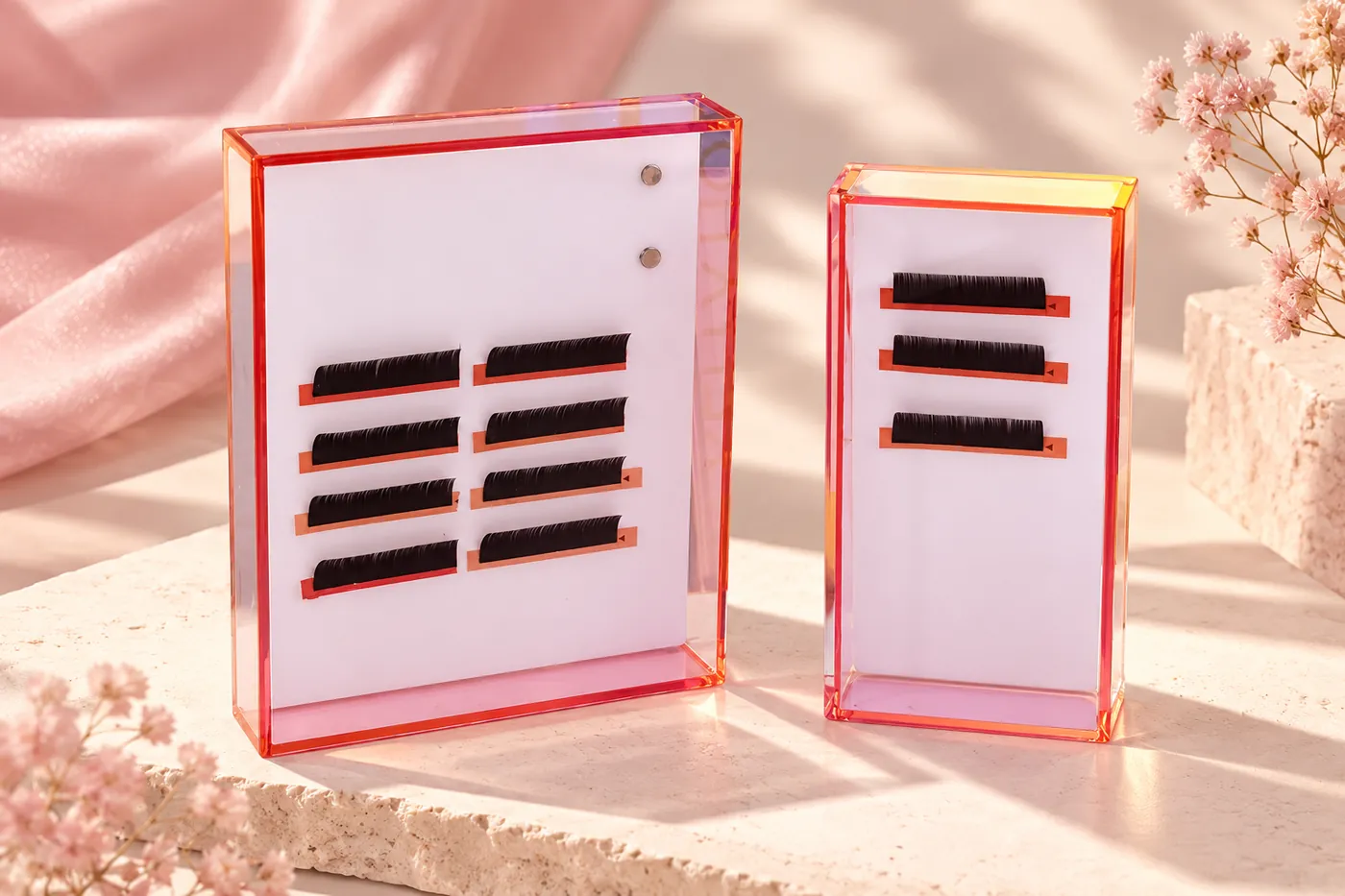
Our acrylic tile and covered-storage references offer several formats, but a product photograph does not establish that every tray, strip or tool fits inside every case.
Record the tile dimensions, usable storage space, lid clearance and lash-strip arrangement you need. A storage sample can then be checked with the chosen products before you standardize it across stations.
Use Inspection Tools as Defined Accessories
The portable foldable mirror reference describes an ABS format with white, pink and black selections. A separate handheld glass lash-root mirror is another accessory with a different form.
Identify which tool belongs at the working station and which is intended for client viewing. Review dimensions and handling requirements for the selected model rather than treating every mirror in the catalogue as interchangeable.
Split the First Order into Core and Later Additions
Your core list should support the service you will open with. Keep untested lash formats, optional retail aftercare and spare display packaging in a later review group so they do not obscure the working essentials.
Prepare a sample shortlist across the actual product families. An accepted lash tray does not approve the adhesive, pad, tool or storage case automatically. List the sample decisions and order quantities separately.
Share the Service and Station Brief
Send your service focus, working-station count, approved tray variants, tool selections and consumable pack requirements. Add the products needing samples, destination and target opening date.
Our team can review the defined supply request with you. Continue to the specialist adhesive, tweezer or consumables guides for product-level decisions, or use the mixed-order guide once your studio list is settled.
Discuss your first studio order