
Custom Lash Development from a Defined Reference Sample
Custom development begins with the difference you want to create. We can review an existing sample, a catalogue reference and your marked changes to the lash shape, base, curl or length arrangement. That gives our Qingdao factory a clearer starting point than a general request for a unique style.
Keep construction, packaging and commercial requirements in separate parts of the brief. A new box design does not itself change the lashes. This guide addresses the product-development route; existing-product branding belongs in the first-brand-range guide.
Explore custom lash references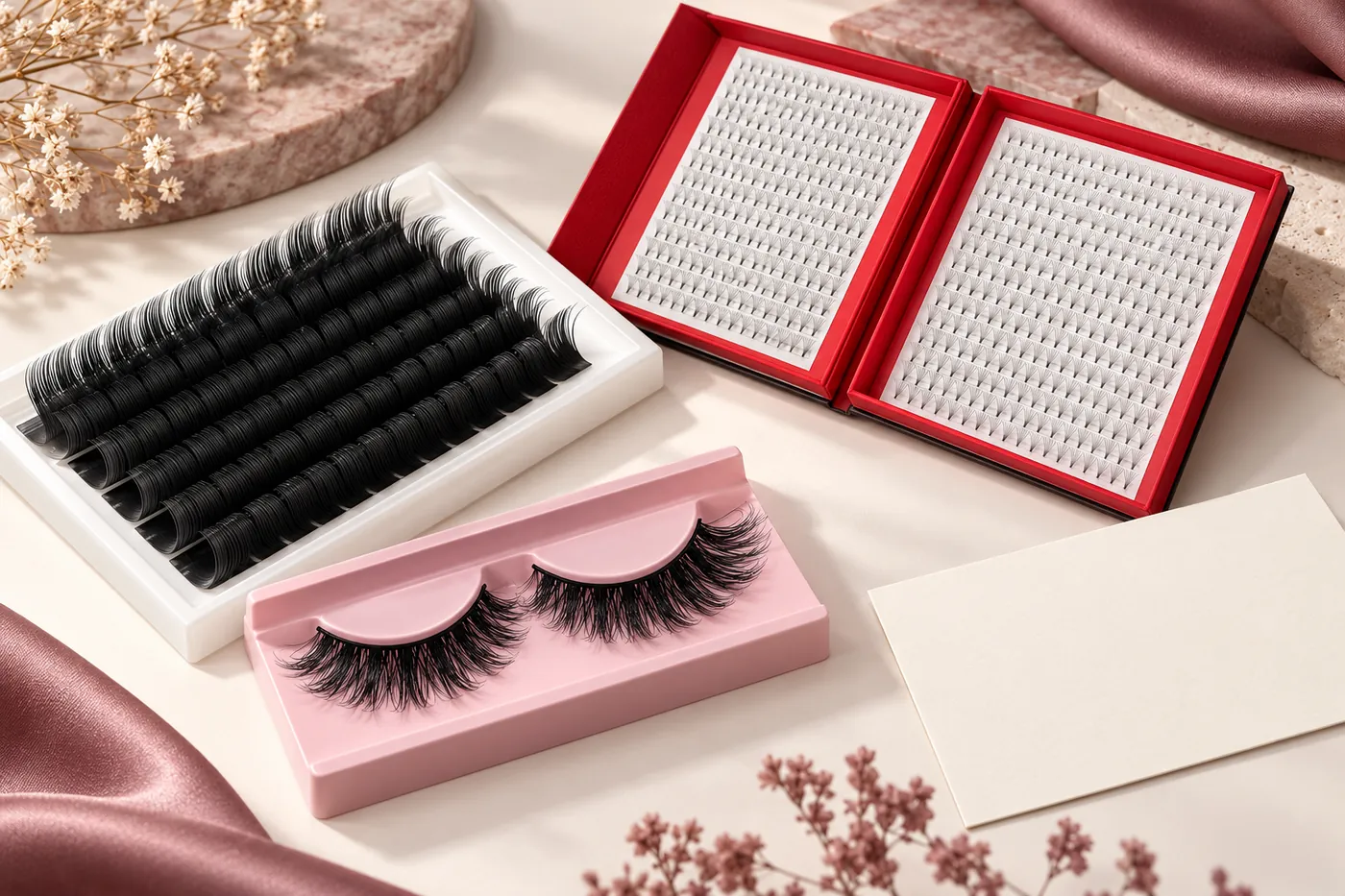
Define the Change Before Choosing the Process
Describe what remains fixed and what changes. For a strip style, keep the approved cotton band while marking a softer outer corner. For a tray, keep the fiber specification while changing the length distribution. For a premade fan, identify the fan count and root profile before discussing its presentation.
A marked top view and side view communicate different details. The top view shows spacing and silhouette; the side view shows the apparent curl. A physical reference adds information that a single promotional photograph cannot provide.
| Reference feature | Keep fixed | Mark the change |
|---|---|---|
| Strip lash | Chosen band and style reference | Inner-to-outer silhouette |
| Tray | Diameter and curl reference | Lengths and row allocation |
| Premade fan | Selected fiber and length | Fan count and root appearance |
Use Catalogue Trays as a Starting Vocabulary
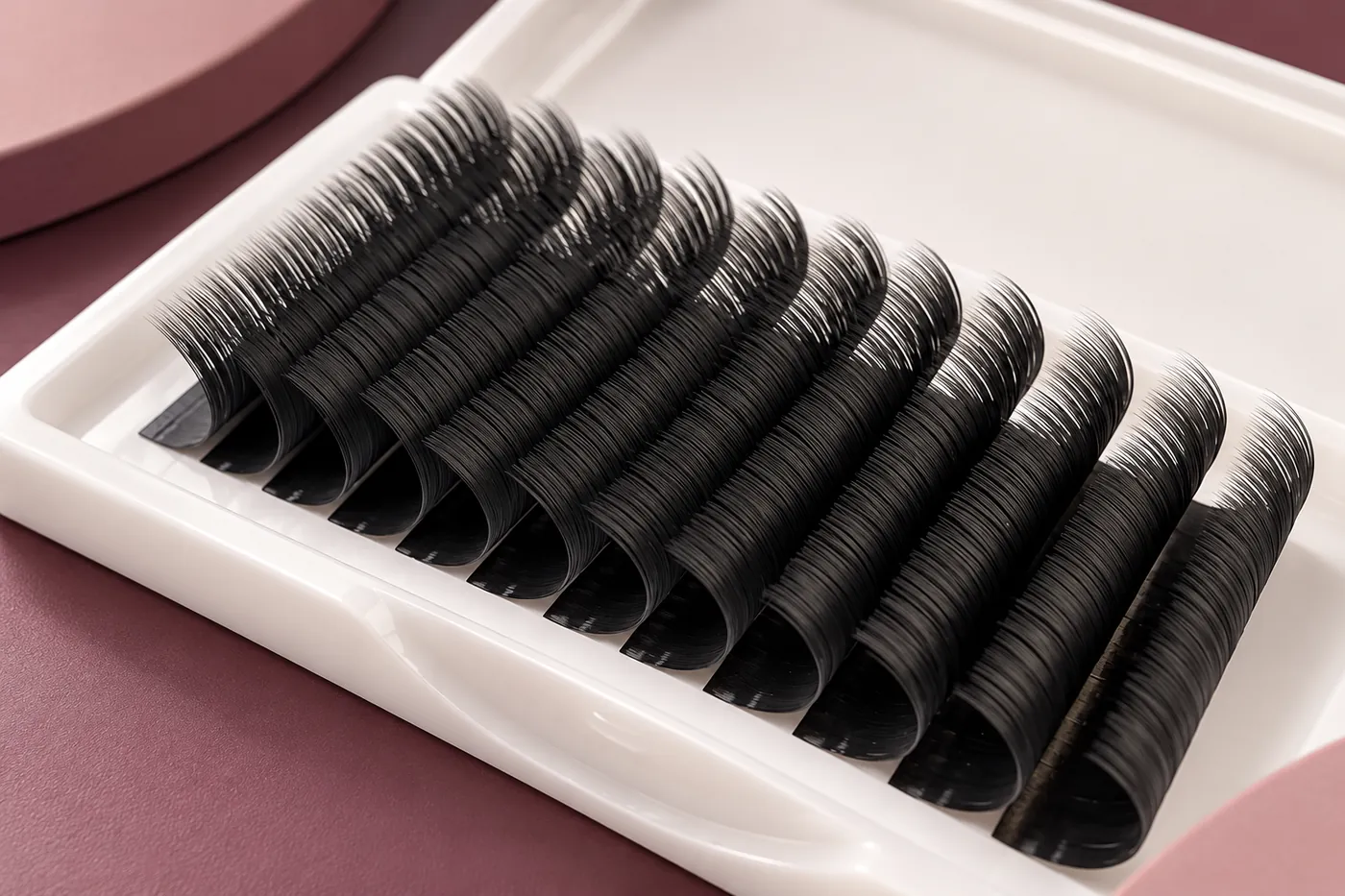
Our 12-row easy-fan tray lists 0.03, 0.05, 0.07 and 0.10 mm diameters, four curls from C to DD and single lengths from 7–25 mm. These fields help describe a starting point without implying that every requested custom arrangement already exists.
A brief can therefore begin with a listed 0.07 mm, D curl, 12 mm reference and then show the requested row arrangement. Keep the reference link and the proposed changes together; do not ask a general product title to carry the whole specification.
Treat Fan Count and Diameter as Different Fields
The premade-fan family names 2D through 10D formats, while the current selectors on the linked reference show 0.07 or 0.10 mm, C or D curl, and single or mixed lengths. A fan-count choice still needs to be identified explicitly in the sample brief.
For procurement, 5D describes a fan's strand count and 0.07 mm describes the nominal fiber diameter. Neither states the root width, fan opening or rows per tray. Specify those visible construction details separately when they matter to your application.
Describe the Strip Profile with an Approved Style
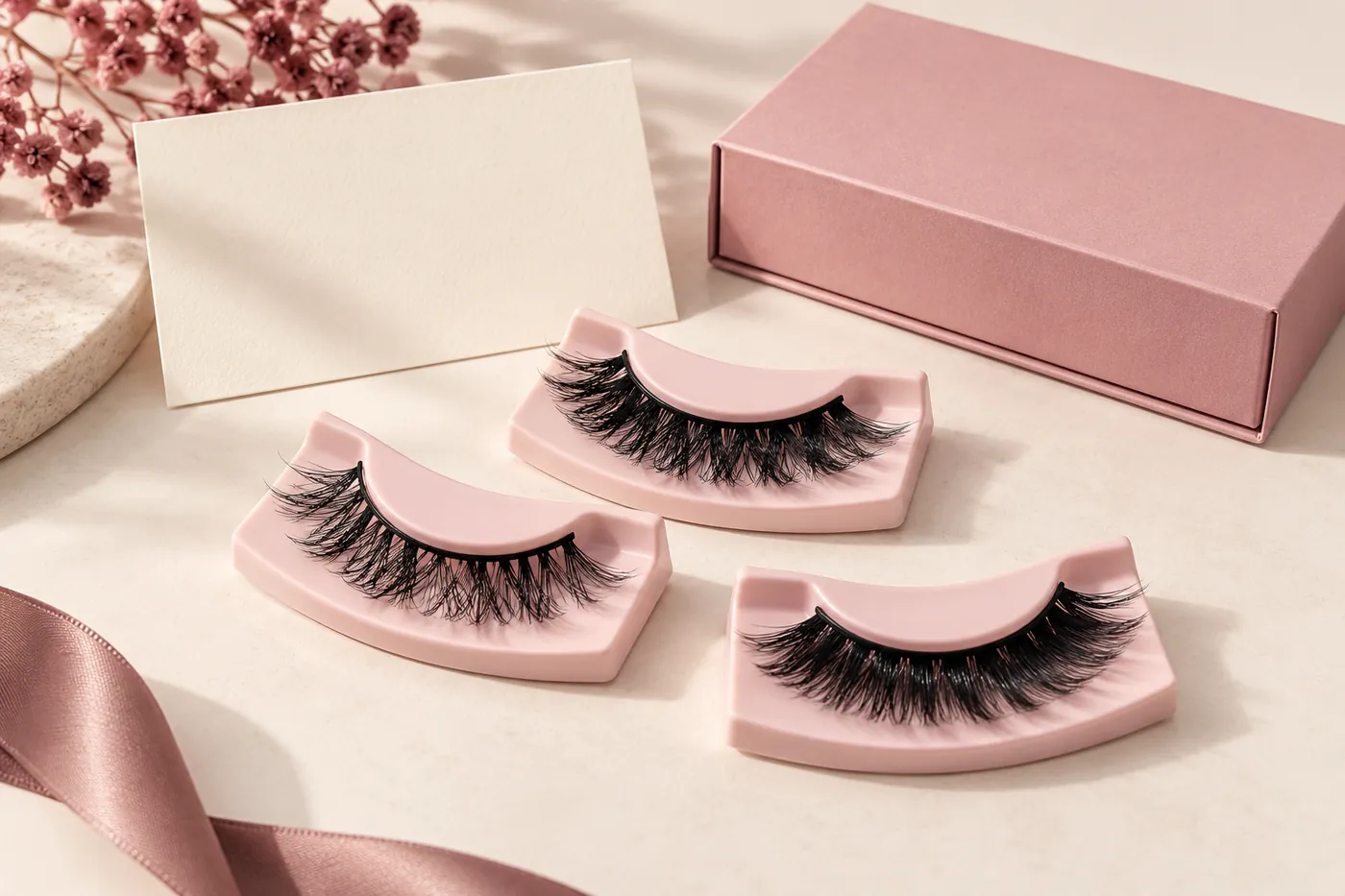
Our cotton-band strip reference describes a 12–15 mm style range and offers individual style codes. Use the selected code and sample as the anchor; the general length range does not establish the exact inner, centre and outer lengths of every style.
Mark the areas you want changed on a clear photograph. Indicate the relative density, spacing and outer-corner direction. Keep the left and right strips together in the sample record so that pair symmetry is reviewed rather than inferred from one lash.
Change One Construction Variable at a Time
A comparison becomes difficult when curl, length, base and finish all change without a record. Give each proposed sample a version code and a short list of differences from the starting reference.
For example, version A can retain the original curl and change only the outer section; version B can be reserved for a later curl comparison. These are planning examples. The feasible construction, sample scope and development charges are reviewed for the actual request.
Make Sample Review Observable
Compare the samples under similar lighting and orientation. Record top-view silhouette, side-view curl, base shape, visible finish, pair symmetry and the way the lashes sit in the tray. For a professional product, have the intended trained user assess handling through the appropriate working process.
Write acceptance notes as observable differences. A statement such as ‘retain the accepted outer-corner direction and current band profile’ is more useful than ‘make it premium’. Any dimensional tolerance or performance test must be agreed rather than invented from a photograph.
Develop the Pack Around the Accepted Construction
A change to the lash outline or tray can change the packaging fit. Review holder size, lid clearance, lash-tip protection and removal access using the accepted product sample before treating the box artwork as final.
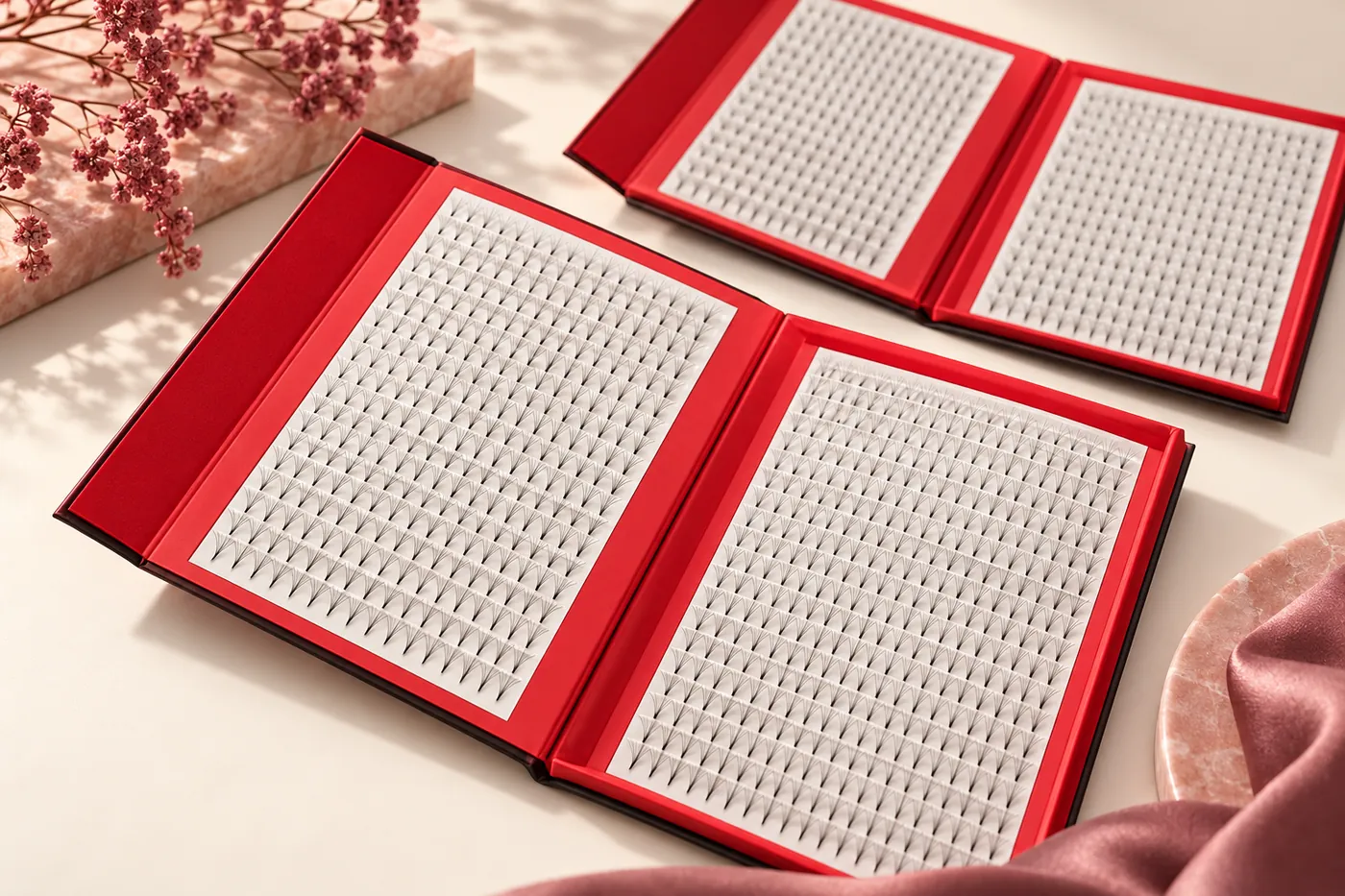
The plain components pictured here illustrate that fit discussion. Printing, logo placement, inserts and any product information need their own proof. Keep a packaging revision separate from a construction revision so that an approved lash is not accidentally replaced while correcting artwork.
Agree on Rights and Release Conditions
Tell us whether the reference is yours to use and describe any exclusivity you need. A sample-development request does not automatically establish exclusive ownership, tooling ownership or market exclusivity.
Record the selected version, approved artwork, quantity basis, development charges and the conditions for production release in the agreed order. An established catalogue style may remain available as a standard item even when its retail presentation carries your brand.
| Decision | Order record |
|---|---|
| Product identity | Accepted reference and version |
| Commercial scope | Sample work, product and packaging lines |
| Rights | Any separately agreed ownership or exclusivity |
| Release | Named approvals and final configuration |
Bring the Reference and the Change List Together
Send the product link or sample photos, the features to retain, the changes requested and the intended customer. Add your target selling unit, packaging concept, destination and planned order quantity.
We can then discuss a defined development project rather than guess at a style from a broad trend name. If the construction can remain unchanged, return to the private-label route; if you are qualifying an alternative supply source, use the reference-matching guide.
Discuss your custom lash brief